






















 Lietuvių
  English
  Русский
 Author: zoomilar
The father and the grandfather of the person were deported from Lithuania in 1949. The person with the son and the daughter, as descendants of deportees, applied for reinstatement of the citizenship of Lithuania. The citizenship of Lithuania was reinstated for them upon preservation of the current citizenship of Russia (a dual citizenship).
A citizen of Lithuania had left for Israel in 2009. The citizen of Lithuania wished acquiring a citizenship of Israel; however, he did not wish renouncing the citizenship of Lithuania. He wished to have a double citizenship. The parents and the grandparents of the person were citizens of Lithuania prior to 15 June 1940.
If a citizen of Lithuania acquires a citizenship of another state, the Migration Department of Lithuania shall be informed about such an acquisition no later than within 3 month from the date of acquisition of a citizenship of the foreign state. After submission of a notice on acquisition of a citizenship of the foreign state, the Migration Department of Lithuania shall consider the problem of losing the citizenship of Lithuania by the person. The citizenship of Lithuania may be preserved, if the circumstances making the applicant eligible for being a citizen of Lithuania and a citizen for another state (such as a fact of being a citizen of Lithuania prior to 15 June 1940, a fact of leaving Lithuania before 11 March 1990, a fact of deportation and so on) are disclosed.
The grandfather of the applicant was born in 1924 in Lithuania and lived there until 1944. During the World War II, the grandfather of the applicant was brought by Germans for forced labour at concentration camps in Germany. The Law of Republic of Lithuania on Citizenship provides cases when a person can be simultaneously a citizen of Lithuania and a citizen of another state. According to the provisions of the Article 7 Paragraphs 2 and 4 of the Law of Republic of Lithuania on Citizenship, a person can be simultaneously a citizen of Lithuania and a citizen of another state, if he (she) had been deported from occupied Lithuania prior to 11 March 1990 and had acquired a citizenship of another state or is a descendant of such a person.
The bringing of the grandfather of the above-mentioned person for forced labour was equated to a fact of deportation and the Migration Department of Lithuania certified the applicant’s eligibility for dual citizenship, i.e. to be simultaneously a citizen of Israel and a citizen of Lithuania.


The immigration programme WORK relates to immigration of an alien to Lithuania on the base of employment in Lithuania.
The conditions of the immigration programme WORK include:
1. An existence of a Lithuanian enterprise that intends to employ the alien;
2. The alien should have the required qualification and the evidences of it (diplomas, training completion certificates and so on);
3. The alien should have at least 1-year experience in the relevant sector of activities within the 2 last years and the evidences of it.
The immigration programme WORK includes: legal consulting, support in obtaining a Residence Permit from the beginning to the end of the process, preparation of the required documents, preparation of inquiries, arrangement of translation and notarization of documents, presentation of the alien at institutions of Lithuania, accompanying of the alien on submission of the documents to the Migration Service as well as at other state institutions and private structures, other legal services.
The terms:
Recognition of diploma – up to 1 month.
Making a decision on issue a Work Permit/ a decision of the Labour Exchange – up to 7 working days.
Making a decision by the Migration Department on issue a Residence Permit – up to 2-4 months.
Issue of the national visa D – up to 15 days.


The immigration programme HIGHLY QUALIFIED SPECIALIST relates to immigration of a highly qualified specialist to Lithuania on the base of employment in Lithuania.
The conditions of the immigration programme HIGHLY QUALIFIED SPECIALIST include:
1. An existence of a Lithuanian enterprise that intends to employ the alien;
2. The alien should be a highly qualified specialist and have the relevant evidence (diploma of higher education);
3. The Lithuanian enterprise should agree to pay a salary no less than 1.5 average gross salary in Lithuania to the alien.
The immigration programme HIGHLY QUALIFIED SPECIALIST includes: legal consulting, support in obtaining a Residence Permit from the beginning to the end of the process, preparation of the required documents, preparation of inquiries, arrangement of translation and notarization of documents, presentation of the alien at institutions of Lithuania, accompanying of the alien on submission of the documents to the Migration Service as well as at other state institutions and private structures, other legal services.
The terms:
Recognition of diploma – up to 1 month.
Making a decision of the Labour Exchange – up to 7 working days.
Making a decision by the Migration Department on issue a Residence Permit – up to 2-4 months.
Issue of the national visa D – up to 15 days.


The immigration programme BLUE CARD relates to immigration of a highly qualified specialist to Lithuania on the base of employment in Lithuania with an opportunity of residing and working at another European Union Member State.
The conditions of the immigration programme BLUE CARD include:
1. An existence of a Lithuanian enterprise that intends to employ the alien;
2. The alien should be a highly qualified specialist and have the relevant evidence (diploma of higher education);
3. The Lithuanian enterprise should agree to pay a salary no less than three average gross salaries in Lithuania to the alien.
The immigration programme BLUE CARD includes: legal consulting, support in obtaining a Residence Permit from the beginning to the end of the process, preparation of the required documents, preparation of inquiries, arrangement of translation and notarization of documents, presentation of the alien at institutions of Lithuania, accompanying of the alien on submission of the documents to the Migration Service as well as at other state institutions and private structures, other legal services.
The terms:
Making a decision by the Migration Department on issue a Residence Permit – up to 1 month.
The grandfather of the applicant was born in Lithuania in 1925 and lived in Lithuania. He was a citizen of Lithuania prior to 15 June 1940.
In 1944, the grandfather of the applicant was arrested, condemned and compulsorily deported to Ukhta Town, Komi Autonomous Soviet Social Republic, for resistance to occupation regime and political reasons. The grandfather was involved in anti-Soviet agitation against military service in the Red Army; he encouraged the conscripts to avoid it. For the above-mentioned, the grandfather of the applicant was punished according to the provisions of Article 58-10 Part 2 of the Penal Code of Russian Soviet Federative Socialist Republic: he was sentenced to 5-year imprisonment and 3-year restriction of rights upon serving the sentence at the penitentiary situated in Ukhta, Komi Autonomous Soviet Social Republic.
The Applicant was born in Russia, then he emigrated to the United States of America. He was a citizen of Russia and the United States of America.
The person had applied for restoration of citizenship of Lithuania without renouncing the earlier granted citizenships.
After the assessment of the circumstances provided in the dossier, the Migration Department of Lithuania passed a positive decision on a restoration of citizenship of Lithuania without renouncing the earlier granted citizenships of Russia and the United States of America in respect of the applicant.
The applicant, a citizen of Belarus, was born in Belarus. In the Certificate of birth of the father of the applicant, it was pointed out that the grandfather of the applicant was Lithuanian. The applicant applied for granting a citizenship of Lithuania according to the simplified procedure.
After the assessment of the circumstances provided in the dossier, the applicant was granted a citizenship of Lithuania according to the simplified procedure. The person renounced a citizenship of Belarus and took an oath to Lithuania.
The great-grandfather of the applicant was born in Lithuania in 1910. In 1929, he was issued a passport that certified his Lithuanian citizenship. The great-great-grandfather of the applicant was born in Lithuania in 1878 and was issued a Lithuanian passport in 1921. In Lithuania, he lived with the great-great-grandmother of the applicant (born in 1883) until their death in 1941. In September 1941, German officers arranged execution of 1500 persons of Jewish origin in Pestiniukai village of Krakes. The great-great-grandparents of the applicant were killed namely during the above-mentioned mass execution.
In 1930, the great-grandfather of the applicant left Lithuania for Argentina, because he felt unsafe in Lithuania and upon taking into account the situation in the country; he feared for his future and thought that if he remains in Lithuania, he would be possibly earlier or later killed by active supporters of ideas of anti-Semitism. Because of his origin (he and members of his family were Jews), the great-grandfather of the applicant felt permanent animosity as well as preconception in respect of him and members of his family.
After leaving Lithuania, the great-grandfather of the applicant remained for permanent residence in Argentina.
The mother and grandmother of the applicant were born in Argentina. The applicant was born in Argentina as well. All of them were citizens of Argentina.
After the assessment of the circumstances provided in the dossier, the Migration Department of Lithuania passed a positive decision on a restoration of citizenship of Lithuania without renouncing the earlier granted citizenship of Argentina in respect of the applicant (Dual citizenship).
The father and the grandfather of the applicant were citizens of Lithuania. The great-grandfather of the applicant was born in Lithuania in 1906. The great-grandmother of the applicant was born in Lithuania in 1917. The great-grandfather and the great-grandmother of the applicant were citizens of Lithuania prior to 15 June 1940. The whole family of the great-grandfather and the great-grandfather were deported in 1948 from Lithuania to Krasnoyarsk Region in Boguchansk District, Russia. In 1957, the great-grandfather died in exile. Other members of the family lived in exile for 10 years.
After the assessment of the circumstances provided in the dossier, the Migration Department of Lithuania passed a positive decision on a restoration of citizenship of Lithuania without renouncing the earlier granted citizenship of Russia in respect of the person (the applicant) and his sister (Dual citizenship).
The grandparents and great-grandparents of the person (the applicant) were citizens of Lithuania prior to 15 June 1940, they were born in Lithuania and lived there. In 1925, the grandfather was issued an internal passport of Lithuania. In 1925, the grandmother was issued an internal passport of Lithuania. In 1928, the future grandparents of the applicant got married in Kaunas. In 1929, the grandparents left Lithuania for South Africa. The great-grandmother of the person was a citizen of Lithuania. In 1921, she was issued an internal passport of Lithuania. The great-grandfather of the applicant was a citizen of Lithuania. In 1921, he was issued an internal passport of Lithuania. The great-grandfather of the person resided in Kaunas before 15 June 1940; he was a baker. When the World War II began, he was brought for forced labour at Dachau concentration camp, Germany. The great-grandfather did not come back to Lithuania: he perished at the concentration camp in 1944.
In 1929, the grandfather and the grandmother of the applicant left Lithuania for South Africa, because they felt unsafe in Lithuania upon taking into account the situation in the country (the disturbance initiated by the population against persons of Jewish origin), feared for their future and thought that if they remain in Lithuania, they would be possibly earlier or later killed by active supporters of ideas of anti-Semitism, like the great-grandfather of the applicant (the father of his grandfather) who remained in Lithuania and was brought to Dachau concentration camp where was killed.
The grandmother and the grandfather of the applicant felt the approaching danger taking into account the general political situation and the events related to persons of Jewish origin in Lithuania and Europe, so they decided to leave Lithuania. Because of their origin (they were Jews), the grandmother and the grandfather of the applicant felt permanent animosity as well as preconception in respect of them and members of their family. Anti-Jewish sallies in the country began as early as approximately in 1915: persons of Jewish origin were expelled from business; the population was urged to buy no goods from Jews; beats of Jews and smashing windows of their houses in small towns became very frequent; signboards of Jewish enterprises were muddied and persons of Jewish origin were persecuted and tortured. In addition, in the said period, the racist ideology was increasingly spreading from Germany to whole Europe, including the middle Lithuania; the ideas of anti-Semitism gradually became stronger as well. Implementation of the policy of anti-Semitism became particularly active in 1941-1942. It is notable that Kaunas County played almost the central role in the history of genocide of Lithuanian Jews (the Holocaust). Kaunas was an administrative and political centre of Lithuania occupied by the Nazi. Namely, in Kaunas City and Kaunas County, the measures of the Nazi occupation policy (including those related to Jews) were implemented first of all. Because of this, Kaunas County may be considered a model of persecution and killing of Jews in the whole Lithuanian province. The full-scale persecution of Jews in Kaunas County as well as in a majority of other locations of Lithuania began in August 1941, when German civil authorities began governing Lithuania, and in the middle of September of the same year, all Jewish communities residing in gminas of Kaunas County were murdered. Before the mass-scale killing of Jews, provisional ghettos and isolation camps were arranged for the same purpose. First of all, it was strived to deprive Jews of civil rights and human rights, to isolate them from people of other nations, then concentrate them in provisional ghettos and isolation camps, confiscate their properties and finally obliterate them. It should be noted that in the above-mentioned period, Jews were persecuted not for political reasons, but because of their origin only. The said historical circumstance caused the mass emigration of persons of Jewish origin from Lithuania since 1915 and in 1941-1942. The most abundant flows of Jewish emigrants from Lithuania in the said period moved towards the South America, the North America and the South Africa.
The father of the applicant was born in South Africa and he was a citizen of South Africa. The applicant was born and lived in South Africa. He was a citizen of South Africa and Israel.
After the assessment of the circumstances provided in the dossier, the Migration Department of Lithuania passed a positive decision on a restoration of citizenship of Lithuania without renouncing the earlier granted citizenship in respect of the person (the applicant), his son, his sister and the daughter of his sister.
The grandparents and great-grandparents of the person (applicant) were citizens of Lithuania prior to 15 June 1940, they were born in Lithuania and lived there. In 1927, the grandfather of the person was issued a Lithuanian Passport for travels abroad and he left for Brasilia. In 1927, the grandmother and the great-grandmother of the person left for Brasilia as well. The great-grandmother of the person was issued a Lithuanian Passport for travels abroad, too. After leaving Lithuania, the great-grandparents and the grandfather of the applicant remained for permanent residence in Brasilia. They were granted a citizenship of Brasilia. The applicant was born in Brasilia.
For the applicant and his mother, the citizenship of Lithuania was restored without renouncing the citizenship of Brasilia because of establishment of the fact of having a citizenship of Lithuania prior to 15 June 1940 and the fact of leaving Lithuania prior to 11 March 1990 (Double citizenship).


Lithuanians worldwidely celebrate this Day in their communities; however, it is celebrated for several years in turn also in Lithuania where various cultural events, expositions and concerts are arranged.

The two-part exhibition is intended to reveal the national traditions of the interwar period of independent Lithuania and the Europeanness of modern art, and the significance of their confluence for the historical-cultural identity of the state of that time and today.
The exhibition will take place at the Šiauliai “Aušra” Museum in the Chaimas Frenkelis Villa (Vilniaus g. 74, Šiauliai) and the Museum of Photography (Vilniaus g. 140, Šiauliai).
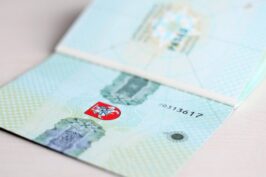
Persons of Lithuanian descent who have never held the citizenship of the Republic of Lithuania, have an opportunity to acquire it under the simplified procedure. In this case, a person does not need to hold examination in the Lithuanian language and in the basic provisions of the Constitution of the Republic of Lithuania, he/she just have to prove his/her Lithuanian descent. The procedure is facilitated by the certificate confirming the Lithuanian descent – upon its submission, no additional documents proving the Lithuanian descent and kinship are required.
In 2014, the citizenship of the Republic of Lithuania was granted to 75 individuals under this procedure. However, a person who has acquired the Lithuanian citizenship under the simplified procedure, must renounce citizenship of another state – dual citizenship is not allowed, unless a person can prove justification for holding dual citizenship (for example, a person exiled from the occupied Republic of Lithuania prior to 11 March 1990 who acquired citizenship of another state, a person who retreated from Lithuania prior to 11 March 1990 and acquired citizenship of another state, or is a descendant of such a person, as well as on other grounds).
A person applying for the citizenship of the Republic of Lithuania under the simplified procedure shall apply submit an application, a document, confirming the person’s identity, Lithuanian descent supporting documents (certificate confirming the Lithuanian descent, certificate confirming retention of the right to the citizenship of the Republic of Lithuania, in the absence of such documents, a person must submit documents confirming that his/her parents or grandparents or one of the parents or grandparents is or was Lithuanian and prove a kinship), as well as a written statement in which the person declares that he/she considers himself/herself a Lithuanian.
It is also important to note, that a person must submit a certificate issued by a foreign state, confirming that the person is not prosecuted / convicted for such acts as aggression, acts of genocide, crimes against humanity, war crimes, has not prepared, attempted to commit or committed criminal acts against the State of Lithuania, neither has not convicted of by a custodial sentence for a premeditated crime which is considered a very severe offense under the laws of the Republic of Lithuania.
Documents complied not in Lithuanian language must be translated into the Lithuanian language, copies of the documents must be approved by a notary. Documents issued by the foreign institutions, also the person’s application on the renouncing of citizenship of another state, its legal translation to the language of the state, which citizen the person is, shall be legalized or validated by a note (Apostille), unless international treaties of the Republic of Lithuania and legislative acts of the European Union provide otherwise.
Documents are submitted to the President of the Republic of Lithuania through territorial police agencies if a person lives in the Republic of Lithuania. If a person resides abroad – the application and other enclosed documents are submitted through the diplomatic missions or consular posts of the Republic of Lithuania or the Migration Department in the Republic of Lithuania.
Following submission of the application on the granting of citizenship of the Republic of Lithuania under the simplified procedure, the documents and their annexes must be submitted to the Citizenship Commission for consideration no later than within 3 months. Citizenship of the Republic of Lithuania is granted by decree of the President of the Republic of Lithuania. Once the President of the Republic of Lithuania adopts a decree on the granting of citizenship of the Republic of Lithuania the person, the person holding citizenship of another state must renounce the citizenship before the decree expires (validity – 2 years). Upon acquiring citizenship of the Republic of Lithuania, the person must swear an oath to the Republic of Lithuania. The person acquires rights and responsibilities of a citizen of the Republic of Lithuania only after having taken the oath of allegiance. Upon failure to take the oath of allegiance, repeat applications for granting of citizenship of the Republic of Lithuania shall not be considered, unless the time limit is missed for particularly serious reasons.
MIGRATION LAW CENTER
If you have any questions regarding Lithuanian citizenship or should you require more information or help, please contact us by e-mail: info@migration.lt or phone: + 370 6 1861886. We will gladly help you.

According to the official data of statistics portal, the number of emigrated people from Lithuania in 2016 is 46 489. Each year the number of Lithuanian emigrants increases and the number of Lithuanian citizens refusing their citizenship increases as well. Lithuanian citizens who live abroad do not lose their Lithuanian citizenship, the state continues to protect them and provide care for them. The Lithuanian Seimas was concerned with the aforementioned problem before; therefore they are looking for ways to solve it.
As one of the ways to solve the problem, the Lithuanian Liberal Movement has prepared and submitted a project to the Lithuanian Seimas in which they proposed to delete the provision of Article 12(2) “With the exception of individual cases provided for by law, no one may be a citizen of both the Republic of Lithuania and another state at the same time” of the Constitution of the Republic of Lithuania by means of referendum.
Following Article 12(5) of the Republic of Lithuania Law on Referendum No IX-929, the date of referendum shall be determined no later than after 3 months and no earlier than 2 months since the Lithuanian Seimas makes a decision on announcement of the referendum. Lithuanian Parliamentary elections will take place on 9 October 2016, it is planned to make the decision during the unordinary parliament session from 11 July 2016 to 9 August 2016 by means of which it will be aimed at amending Article 12(2) of the Constitution of the Republic of Lithuania. During a meeting on 16 December 2015, the Commission of the Seimas of Constitution proposed to amend the old provision of the Constitution of the Republic of Lithuania to the following one: “Lithuanian citizens according to their descent who have acquired a citizenship of another state shall keep Lithuanian citizenship. With the exception of individual cases provided for by law, other persons may not be a citizen of both the Republic of Lithuania and another state at the same time.”
In Article 7 of the Republic of Lithuania Law on Citizenship No XI-1196 of 2 December 2010, it is indicated that the dual citizenship is allowed in the following cases:
1. A person has acquired citizenship of the Republic of Lithuania and citizenship of another state at birth;
2. A person was adopted by citizens (citizen) of the Republic of Lithuania and acquired Lithuanian citizenship or was adopted by citizens (citizen) of another state and acquired the citizenship of that state. In such a case, a person can keep the dual citizenship until 21 years of age.
3. A person who fled the occupied Republic of Lithuania before 11 March 1990 and acquired citizenship of another state or is a descendant of that person;
4. A person who was exiled from the occupied Republic of Lithuania before 11 March 1990 and acquired citizenship of another state;
5. By virtue of marriage to a citizen of another state;
6. A person has acquired citizenship of the Republic of Lithuania by way of exception while being a citizen of another state;
7. A person has acquired citizenship of the Republic of Lithuania while having refugee status in the Republic of Lithuania.
Article 3 of the Republic of Lithuania Law on Referendum No IX-929 of 4 June 2002 stipulates that in order to amend the provision of the Constitution of the Republic of Lithuania, more than a half of Lithuanian citizens having the right to vote and included in the lists of electors shall vote for it. Persons from 18 years of age have the right to vote in the country. According to the data of the register of October 2015, there are 2, 5 million of electors in the list.
The right to vote is not limited to Lithuanian citizens living abroad, they just like the other Lithuanian citizens have a right to vote and can implement it. All Lithuanian citizens having a document attesting Lithuanian citizenship, such as an identity card or a Lithuanian passport are included in the list of electors and are included in the register of Lithuanian residents. The Central Electoral Commission is occupied with compiling and managing the lists of electors. The following persons shall not be included in the list: dead persons, persons concerning which an order of the court to declare them incapacitated became final; persons who lost their Lithuanian citizenship.
Lithuanian citizens living abroad and having no possibility to return to Lithuania, have the right to vote in the following order:
– By arriving to a Lithuanian consular institution or a diplomatic representation (place, time of voting and more detailed information are provided in the web pages of the institution);
– by voting in advance by mail after having registered in the web site -http://www.vrk.lt/ereg.
During a sitting of the Lithuanian Seimas, the Minister of Justice of the Republic of Lithuania claimed that the aforementioned amendments will allow Lithuanian citizens to keep their citizenship in order to allow their children to return to their native country after a while. A Lithuanian citizen having a dual citizenship is equal to other Lithuanian citizens. Having a citizenship of another state, he is not released from the obligations laid down in the Constitution of the Republic of Lithuania, the laws and other legislations. Thanks to a dual citizenship, a citizen gets twice as much of rights, obligations and social guarantees. Lithuanian citizens having a dual citizenship will be able to participate in the governing of the country which is very important in such countries where sovereignty belongs to the nation. Negative comments of the members of Lithuanian Seimas can also be heard who claim that a Lithuanian citizen who has emigrated to another country can only be loyal to one of the countries. It is feared that citizens will abuse their right with regard to one of the countries. It is proposed to include a separate article in the Republic of Lithuania Law on Citizenship which would indicate the countries where the citizens would be able to acquire a Lithuanian citizenship without refusing their own citizenship.
At the moment, a dual citizenship is legal in 20 Member States of the European Union. Such states as Norway, Denmark, Estonia, and Austria preclude a dual citizenship, but like in Lithuania, they apply certain exceptions. This only proves mitigated point of view of countries towards the issue of a dual citizenship
MIGRATION LAW CENTER
If you have any questions regarding Lithuanian citizenship or should you require more information or help, please contact us by e-mail info@migration.lt or tel. + 370 6 1861886. We will gladly help you.

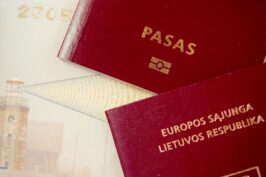
Lithuanian passport is a document attesting Lithuanian citizenship of a person, his or hers legal relationship with the state of Lithuania. A Lithuanian passport is issued to a person when he or she acquires Lithuanian citizenship in one of the following ways of acquiring of Lithuanian citizenship: by birth, by restoration of Lithuanian citizenship, by granting of Lithuanian citizenship to a person under simplified procedure, by naturalization or by other way.
Lithuanian citizenship might be restored to a person if he or her or his or hers parents, grandparents or ancestors were Lithuanian citizens before 15/06/1940. The following documents might be used to attest Lithuanian citizenship had before 15/06/1940: Lithuanian passports issued before 15/06/1940, certificates, birth certificates and other documents which indicate Lithuanian citizenship, documents attesting a person’s military service in the Lithuanian army or work in public service or documents attesting living in Lithuania until 15/06/1940.
A person’s Lithuanian citizenship might be restored in two ways: by refusing the current citizenship or by keeping the current citizenship (double citizenship). In order to obtain a double citizenship it is not enough to prove having had Lithuanian citizenship before 15/06/1940. Additional conditions granting a person the right to be Lithuanian citizen and a citizen of another state are necessary. The following might be attributed to such conditions: forcible deportations and emigration to another state before 11/03/1990, except for emigration to the territory of the former Soviet Union after 15/06/1940.
Other conditions of acquiring a double citizenship also exist which are indicated in the Republic of Lithuania Law on Citizenship, such as acquiring of a citizenship of a foreign state by birth, cases of adoption, marriage and other cases.
So, speaking of acquiring of a double citizenship, in cases of forcible deportation from Lithuania or emigration before 11/03/1990, the following conditions of acquiring of a double citizenship might be distinguished:
1. Having of Lithuanian citizenship before 15/06/1940: a person or his or hers father, mother, grandfather, grandmother, great-grandfather, great-grandmother were a Lithuanian citizen before 15/06/1940;
2. Fact of forcible deportation: a person or his or hers father, mother, grandfather, grandmother or great-grandfather, great-grandmother were forcibly deported from Lithuania;
or
3. The fact of emigration from Lithuania before 11/03/1990: a person or his or hers father, mother, grandfather, grandmother or great-grandfather, great-grandmother emigrated from Lithuania before 11/03/1990 to reside permanently in another state except for emigration after 15/06/1940 to the territory of the former Soviet Union, and their residence on 11/03/1990 was not in Lithuania.
In addition to these circumstances, the documents attesting these circumstances are necessary. Documents attesting Lithuanian citizenship before 15/06/1940, documents attesting forcible deportation or emigration from Lithuania before 11/03/1990, documents attesting family links, documents attesting changing of first name and (or) surname might be attributed to the principle documents. In absence of the aforementioned documents, their search might be performed in Lithuanian archives. The following personal data are necessary to perform search in one of the Lithuanian archives: first name, surname, date of birth, place of birth, place of residence in Lithuania.
If a person is of Lithuanian descent, Lithuanian citizenship might be granted to him or her under simplified procedure. A person of Lithuanian descent is a person whose parents or grandparents (or one of them) are or were Lithuanian and who considers himself or herself Lithuanian. In this case a person’s citizenship, ethnicity are assessed rather than the fact of having Lithuanian citizenship. Most common documents attesting a person’s Lithuanian descent are official documents of public institutions which indicate that a person’s father, mother, grandfather or grandmother are or were Lithuanian (birth certificate or other documents). In case of granting of Lithuanian citizenship under simplified procedure, a citizenship of a foreign state must be refused.
A person shall address to Lithuanian Migration Service or to Lithuanian Embassy, or a consular institution abroad in order to obtain a Lithuanian passport.
MIGRATION LAW CENTER
If you have any questions regarding Lithuanian citizenship or should you require more information or help, please contact us by e-mail: info@migration.lt or phone: + 370 6 1861886. We will gladly help you.


All citizens of the European Union (EU) can enjoy not only national rights, but also EU rights. The following are the main rights of EU citizens: a right of free movement, settlement, employment, studying or even retirement in any EU country, as well as a right of consular protection provided by other EU Member States.
To become an EU citizen is mostly tempted by a right of free movement which provides an opportunity to freely move and reside in the EU without any obstacles. The concept of EU right of free movement shall also embrace a free movement of employees. EU citizens shall be entitled to:
– search for job in another EU country,
– work therein without a work permit,
– reside therein regarding work,
– remain therein even if no longer employed,
– be treated in the same way as citizens of that country when seeking for job, have the same working conditions, and all other social and tax benefits.
EU rights provide its citizens with an opportunity to use healthcare services within the EU. Moreover, they ensure a common consular protection to its citizens around the world. When travelling in a non-EU country, where there is no diplomatic mission of a country of EU citizen, one can seek for help and protection in any other Embassy or Consulate of EU country.
EU citizens can bring their family members to the Republic of Lithuania and stay here with them for up to 3 months counting from the first day of arrival in the Republic of Lithuania. In order to stay longer, an EU citizen should apply for an EU citizen’s certificate, whereas family members of an EU citizen who have submitted documents evidencing this fact should apply for the issue of EU family member’s residence card.
The EU guarantees to citizens of its Member States a right of free movement, right of work, and ensures that every citizen of another EU country should receive all social guarantees and rights as citizens of that country. Family members of EU citizens who hold an EU family member’s residence card issued in another Member State can travel within the EU without visas and enjoy the same rights as EU citizens.
MIGRATION LAW CENTER


Family reunification is one of the grounds for a non-EU citizen to acquire a right to reside in the EU. Family members of EU citizens who reside, work, study or carry out any other activity in other EU country, who are not EU citizens, can obtain a permit to reside and move freely within a territory of EU without a visa.
The following persons shall be considered family members of an EU citizen:
– spouse/registered partner;
– direct descendants of an EU citizen having the right to reside in Lithuania, or direct descendants of his spouse/registered partner who are under the age of 21;
– dependent direct descendants of an EU citizen having the right to reside in Lithuania, or dependent direct descendants of his spouse/registered partner;
– dependent parents/grandparents of an EU citizen having the right to reside in Lithuania, or dependent parents/grandparents of his spouse/registered partner.
– A person who enjoys the right of free movement under legal acts of the European Union shall also be treated a family member:
– a person who is not a family member of an EU citizen but is a cohabiting partner with whom the citizen of the EU Member State has durable relationship during the past 3 (three) years;
– a person who is a dependant or a member of the household of the citizen of the EU Member State;
– a person whose serious health grounds strictly require a personal care provided by the citizen of the EU Member State.
In order to obtain a residence card of a family member of EU citizen, which can be issued for a period of 5 (five) years, an alien must submit the following documents:
– a valid passport;
– a certificate of EU citizen evidencing that an EU citizen resides in Lithuania;
– a proof of existence of family relationship (e.g., marriage certificate or birth certificate);
– in case of children and grandchildren, a proof will be required that they are under the age of 21 or are dependants of EU citizen;
– in case of parents and grandparents, a proof will be required that they are dependants of EU citizen;
– in case of other members of a family, a proof will be required that they are dependants or that their serious health grounds strictly require a personal care provided by EU citizen;
– in case of partners with whom a marriage has not been concluded, evidence of long-term or durable relationship will be required.
Family members who do not have EU citizenship, but intend to live in Lithuania, will have to declare their place of residence in Lithuania.
In the event that an EU citizen permanently resides only in his own country and has never exercised the right of free movement of EU law, his family members who are non-EU citizens coming to live with him shall be subject to national rules. In this case, family members in Lithuania should apply for an issue of temporary residence permit in the Republic of Lithuania.
MIGRATION LAW CENTER
The two-part exposition discloses the national traditions and the European character of modern arts in Independent Lithuania in the interwar period and the importance of their combination for the historical and cultural identity of the state in the said period and today.
The exposition will be arranged at Šiauliai “Aušra” Museum Chaimas Frenkelis villa (Vilniaus St, 74, Šiauliai) and at the Photography Museum (Vilniaus St, 140, Šiauliai).
The annual project,, Lessons in Communities: On the Way to Lithuania” is initiated by the Department of Supervision of Social Services under the Ministry of Social Protection and Employment. In the run of implementation of the project, one-week training courses for former deportees and political prisoners of Lithuanian origin as well as members of their families residing in the territory of the former USSR are arranged, thus providing them an opportunity to learn Lithuanian or to improve their Lithuanian skills and to take part in social and cultural events. Participants of the project and representatives of communities are provided an opportunity to extend their knowledge about Lithuania, to take part in excursions, to adapt them successfully and to be involved in the activities of communities.
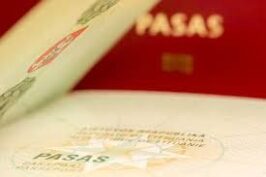
Reinstatement of Lithuanian citizenship
Reinstatement of Lithuanian citizenship is a process of a obtaining of citizenship of Lithuania for a person in one of the available ways.
Who Is Eligible for Reinstatement of Lithuanian Citizenship?
A citizenship of Lithuania may be reinstated for a person, if such a person was a citizen of Lithuania prior to 15 June 1940 (1918 02 16 – 1940 06 15). In addition, a citizenship of Lithuania may be reinstated for descendants of persons who were citizens of Lithuania prior to 15 June 1940. This provision is applicable to three generations of descendants, i.e. to children, grandchildren and great-grandchildren.
Is Dual Citizenship Possible During Reinstatement of Lithuanian Citizenship?
If a person wishes to reinstate his/her citizenship of Lithuania, he/she can renounce a citizenship of the other state or choose a double (dual, multiple) citizenship. A dual citizenship may be granted in Lithuania in exceptional cases only, for example, to a person having left Lithuania prior to 11 March 1990 or was exiled as well as to descendants of such a persons.
Reinstatement of Lithuanian Citizenship Without Renouncing Current Citizenship
The requirement to renounce citizenship of a different state is not applied to persons who can be citizens of both the Lithuania and a different state, in accordance with the Law on Lithuanian Citizenship article 7 subsections 2, 3, and 4, i.e.:
- the person who was exiled from the occupied Republic of Lithuania before 11 March 1990 (1940 06 15 – 1990 03 11);
- the person who left Lithuania before 11 March 1990 (1918 02 16 – 1990 03 11);
- the person who is a descendant of a person mentioned above.
Conditions for Dual Citizenship During Reinstatement of Lithuanian Citizenship
- Lithuanian citizenship before 15 June 1940 (1918 02 16 – 1940 06 15);
- departure from Lithuania before 11 March 1990 (1918 02 16 – 1990 03 11); or
- exile from Lithuania before 11 March 1990 (1940 06 15 – 1990 03 11).
Eligibility for Dual Citizenship
The person was a Lithuanian citizen before 15 June 1940 or the person is a descendant (child, grandchild, great-grandchild) of a person who had Lithuanian citizenship before 15 June 1940 and the person or his/her ancestors (parents, grandparents or great-grandparents) left Lithuania before 11 March 1990 or were exiled.
Dual, multiple citizenship for descendants of Lithuanian citizens During Reinstatement of Lithuanian Citizenship
Dual citizenship is possible for descendants of Lithuanian citizens if they are descendants of a person who was a citizen of Lithuania before 15 June 1940, i.e. the person’s ancestors: father, mother, grandfather, grandmother, great-grandfather and (or) great-grandmother, or one of them was a citizen of Lithuania before 15 June 1940 or the person was a citizen of Lithuania before 15 June 1940 and left Lithuania before 11 March 1990, except for leaving for the former territory of the Soviet Union after 15 June 1940, or the person and (or) his ancestors were exiled from Lithuania before 11 March 1990.
If there is evidence that the person or his ancestors were citizens of Lithuania before 15 June 1940, and the person or his ancestors left Lithuania before 11 March 1990, except for leaving for the former territory of the Soviet Union after 15 June 1940, or the person and (or) his ancestors were exiled from Lithuania before 11 March 1990, a person has the right to apply for the reinstatement of Lithuanian citizenship without renouncing their current citizenship. In this case, dual or multiple citizenship is possible, when a person can become a Lithuanian citizen and retain the citizenship of his country or countries of which he is a citizen.
In other cases, Dual Citizenship in Lithuania can be Acquired by persons who:
- gained Lithuanian citizenship and citizenship a different state by birth;
- gained a foreign citizenship by virtue of marriage to a citizen of a different state;
- provided they were adopted by a citizen (-s) of Lithuania before reaching 18 years of age and, as a result of the adoption, acquired Lithuanian citizenship;
- provided they, being citizens of Lithuania, were adopted by a citizen (-s) of a different state before reaching 18 years of age and, as a result of the adoption, acquired citizenship of that state;
- acquired Lithuanian citizenship by way of exception while being a citizen of a different state;
- acquired Lithuanian citizenship while having a refugee status in Lithuania;
- retained Lithuanian citizenship or who has citizenship of the Republic of Lithuania restored for his outstanding merits to the Republic of Lithuania;
- acquired citizenship of the Republic of Lithuania while having refugee status in the Republic of Lithuania;
- acquired Lithuanian citizenship by birth and acquired citizenship of another state until he turned 18 in other way than by birth.
Steps for Reinstatement of Lithuanian Citizenship
- Collection of documents;
- Preparation of documents;
- Submission of documents to the Migration department;
- Making a decision;
- Issuance of a Lithuanian passport.
Searching for Documents in Lithuanian and German Archives
The process of preparation of documents for Reinstatement of Lithuanian citizenship starts from collection of the required data and documents. In case of lack of any data and documents, a search for them shall be carried out at Lithuanian archives and in some cases in German archives and other state institutions as well as other sources. If a search is arranged according to the established procedure, it continues for about a month, in some cases longer; in urgent cases, it may be completed within 5 workdays or within 10 workdays.
Document Requirements for Reinstatement of Lithuanian Citizenship
After collection of the required documents, any documents executed in a language other than Lithuanian shall be translated into Lithuanian; copies of the documents shall be notarized. Documents issued in foreign states shall be certified by Apostille or legalized, unless otherwise is provided by international treaties of Lithuania or legal norms of the European Union.
Where to Submit Your Application?
The documents shall be submitted to the Migration Department of Lithuania or to a diplomatic mission or a consular institution of Lithuania in a foreign state.
Required Documents for Reinstatement of Lithuanian Citizenship
A person shall submit the following documents:
- The application for reinstatement of citizenship of Lithuania;
- The person’s identification document;
- The document certifying that the person was a citizen of Lithuania prior to 15 June 1940 or is a descendant of a person who was a citizen of Lithuania prior to 15 June 1940;
- A document evidencing the change of name or surname where such personal data have been changed;
- The document certifying that the person is not a citizen of another state, except of cases when the person may be simultaneously a citizen of another state;
- The documents certifying that at least one of the provisions specified in the Subparagraphs 2, 3 and 4 of the Article 7 of the Law of Republic of Lithuania is satisfied, if the person is a citizen of another state.
Reinstatement of Lithuanian Citizenship: How Long Does It Take?
According to the relevant norms of Lithuania, a decision on reinstatement of citizenship of Lithuania shall be passed no later than within 6 months; in practice, the process may last for about 6-12 months and even longer in certain cases.
Free Legal Assessment for Lithuanian Citizenship Eligibility
Free Legal Assessment: Lithuanian Citizenship Eligibility
The lawyers of MIGRATION LAW CENTER offer a free legal Assessment (analysis) of your options for obtaining Lithuanian citizenship. To receive a detailed analysis, please complete an application form by clicking this link – FORM.
Following a thorough legal analysis of your options that would allow to obtain Lithuanian citizenship, our lawyers will provide you with a written response (analytical results) regarding your options of obtaining Lithuanian citizenship and further requirements as well as procedure processes.
Can I get free legal advice on Reinstatement of Lithuanian citizenship?
Yes, to learn more about Reinstatement of Lithuanian citizenship, the process of preparing and submitting documents to competent state institutions, or to order legal assistance, please contact us:
• Email: info@migration.lt
• Phone: +37068563053
If you have any questions regarding Lithuanian citizenship or should you require more information or help, please contact us by e-mail: info@migration.lt or phone: + 370 6 1861886. We will gladly help you.
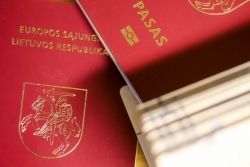
Dual Citizenship in Lithuania: Exceptional Cases and Requirements
Dual (double) citizenship can be allowed in Lithuania in exceptional cases only.
Who Qualifies for Dual Citizenship in Lithuania?
The cases when Dual citizenship in Lithuania is allowed in Lithuania include:
- A person was exiled from occupied Lithuania prior to 11 March 1990 or is a descendant (a child, a grandchild or a great-grandchild) of a person exiled from occupied Lithuania prior to 11 March 1990 (1940 06 15 – 1990 03 11);
- A person left Lithuania prior to 11 March 1990 or is a descendant (a child, a grandchild or a great-grandchild) of a person having left Lithuania prior to 11 March 1990 (1918 02 16 – 1990 03 11);
- Child dual citizenship cases;
- Child-adoption cases;
- Marriage cases;
- Acquisition of citizenship of Lithuania in exceptional cases or by a person having a status of a refugee;
- Retention of Lithuanian citizenship or granting of Lithuanian citizenship for exceptional merit.
If you or your ancestors meet any of these conditions, you may be eligible for dual citizenship in Lithuania.
Conditions for Dual Citizenship in Lithuania for Exiles and Their Descendants
A person exiled from occupied Lithuania prior to 11 March 1990 (1940 06 15 – 1990 03 11) is a person compulsorily at a decision of a court or other institutions exiled from Lithuania (sent to a concentration camp, imprisoned or deported for forced labour etc.) for resistance to the occupation regimes or because of political, social or origin-related reasons (or a descendant of such a person); the said provisions are applicable to a descendant of such a person. If this person was a Lithuanian citizen prior 15 June 1940 (1918 02 16 – 1940 06 15), or is a descendant (a child, grandchild, or great-grandchild of such a citizen), they may qualify for dual citizenship in Lithuania.
Dual Citizenship in Lithuania for Lithuanian Emigrants and Their Descendants
A person left Lithuania prior to 11 March 1990 is a person who was a citizen of Lithuania prior to 15 June 1940 (1918 02 16 – 1940 06 15) and left Lithuania prior to 11 March 1990 (1918 02 16 – 1990 03 11), or his (her) descendents having left the territory of today Lithuania for another state prior to 11 March 1990, if their country of permanent residence was out of Lithuania on 11 March 1990. This definition is not related to persons having left the territory of Lithuania for the territory of the formed Soviet Union after 15 June 1940.
For qualifying emigrants and their families, dual citizenship in Lithuania can be restored or retained under current laws.
Dual Citizenship in Lithuania for Children: What You Need to Know
In course of growing of migration flows from Lithuania and the number of marriages concluded by and between citizens of Lithuania and citizens of foreign states, the number of children with dual citizenship is growing as well. According to the current legislation of Lithuania, a child has the right to be a citizen of Lithuania and a citizen of another state if he or she acquired Lithuanian citizenship by birth (one or both parents were citizens of Lithuania at birth) and the citizenship of another state was acquired by birth or the citizenship of another state was acquired under 18 years old not by birth.
Marriage and Dual Citizenship: Lithuanian Legal Framework
In case of a marriage, a person got married to an alien may have a dual citizenship, if the person was automatically granted a citizenship of the state of residence of the spouse after registration of the marriage with the citizen of the foreign state. Such practice of naturalization is more typical for Islamic states where no supplemental formalities are required for granting the citizenship and the only fact of registration of marriage is sufficient. Such persons are not required to renounce the citizenship of another country.
Adoption and Dual Citizenship in Lithuania: Key Regulations
A person (being a citizen of Lithuania) may be adopted by a citizen or citizens of a foreign state and acquire a citizenship of the foreign state. A citizen or citizens of Lithuania may adopt a person that is a citizen of a foreign state. A citizen of Lithuania can also be a citizen of another state if he:
- a person who is adopted by a citizens (citizen) of Lithuania under the age of 18 and as a result has acquired Lithuanian citizenship; or
- a person is a citizen of Lithuania if he was adopted by citizens (citizen) of another state before reaching the age of 18 and as a result acquired the citizenship of another state.
Exceptional Dual Citizenship in Lithuania Cases: Merit-Based and Refugee Status
More rare cases of dual citizenship in Lithuania are related to exceptional granting the citizenship of Lithuania to some persons for certain merits for Lithuania or to those provided a status of a refugee.
Document Preparation for Lithuanian Dual Citizenship Applications
The process of preparation of the documents for Dual citizenship in Lithuania in case of Reinstatement of Lithuanian citizenship shall be started from collection of the required documents and search for the lacking ones. Such a search is often carried out at archives of Lithuania and Germany. The search for documents at Lithuanian and German archives may continue for from 5 to 30 workdays, in some cases longer. After collection of the required documents, they shall be certified according to the procedure provided in laws and their translation shall be carried out, if the language of the documents is other than Lithuanian. Documents issued in foreign states shall be certified by Apostille or legalized, unless otherwise is provided by international treaties of Lithuania or legal norms of the European Union.
Steps to Apply for Dual Citizenship in Lithuania
The steps in the process of acquiring Dual citizenship in Lithuania depend on the specific procedure being applied. The main steps to apply for dual citizenship are:
- Collection of documents;
- Preparation of documents;
- Submission of documents to the Migration department;
- Making a decision;
- Issuance of a Lithuanian passport.
Required Documents for Reinstatement of Lithuanian Citizenship
The principal documents to be submitted for a Reinstatement of Lithuanian citizenship:
- The application completed in Lithuanian;
- The passport;
- The documents certifying that the person was a citizen of Lithuania prior to 15 June 1940 or is a descendant of a person who was a citizen of Lithuania prior to 15 June 1940;
- The evidences of the circumstances proving the person to be eligible for dual citizenship;
- The documents certifying the family connections;
- A document evidencing the change of name or surname where such personal data have been changed.
Documents Proving Lithuanian Citizenship Before June 15, 1940
The documents certifying that the person was a citizen of Lithuania prior to 15 June 1940 may be following:
1. Lithuanian passports issued before 15 June 1940;
2. Documents certifying military service of the person in Lithuanian army or civil service in Lithuania;
3. Certificates of Birth or other documents where the citizenship is specified;
4. Any certificates issued in Lithuania before 15 June 1940 or certificates issued on the base of documents issued before 15 June 1940.
If the above-listed documents are absent, documents on education, employment or living in Lithuania issued before 15 June 1940 shall be provided.
Where to Submit Documents for Dual citizenship in Lithuania Applications
The documents shall be submitted to:
- a diplomatic mission or a consular institution in a foreign state – Lithuanian diplomatic missions and Consular institutions;
- the Migration department in Lithuania – Migration department.
Timeline for Lithuanian Citizenship Reinstatement Process
According to the relevant norms of Lithuania, a decision on Reinstatement of Lithuanian citizenship shall be passed no later than within 6 months; in practice, the process may last for about 6-12 months and even longer in certain cases.
Key Benefits of Dual Citizenship in Lithuania:
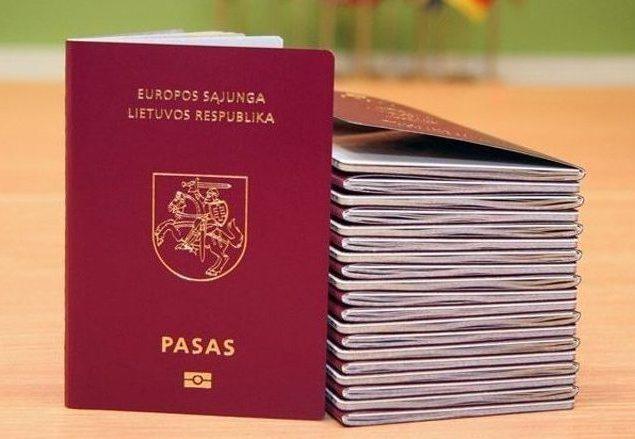
1. Freedom of Movement
As a Lithuanian (EU) citizen, you have:
-
Visa-free access to the Schengen Area and most EU countries.
-
The right to live, work, and study in any EU member state.
If your second citizenship is non-EU (e.g., USA, Canada, UK), you also gain mobility outside the EU.
2. Preservation of Lithuanian Identity
Many Lithuanians who emigrated during war or Soviet occupation, and their descendants, value dual citizenship because it allows them to:
-
Maintain strong cultural and historical ties to Lithuania,
-
Reconnect with family roots and heritage.
3. Access to Social and Public Services
Lithuanian citizens (even with another citizenship) may:
-
Access state healthcare and education while residing in Lithuania,
-
Benefit from certain social security rights or pensions (depending on residency and agreements).
4. Property and Inheritance Rights
-
Dual citizens have the unrestricted right to own property in Lithuania.
-
Easier management of inheritance and legal matters related to family estates.
5. Economic and Business Opportunities
Lithuanian citizenship may offer:
- Tax advantages for EU-based business activities,
- Easier registration of companies or investment in Lithuania,
- Access to EU grants or programs.
Free Legal Assessment for Lithuanian Citizenship Eligibility
Free Legal Assessment: Lithuanian Citizenship Eligibility
The lawyers of MIGRATION LAW CENTER offer a free legal Assessment (analysis) of your options for obtaining Lithuanian citizenship. To receive a detailed analysis, please complete an application form by clicking this link – FORM.
Following a thorough legal analysis of your options that would allow to obtain Lithuanian citizenship, our lawyers will provide you with a written response (analytical results) regarding your options of obtaining Lithuanian citizenship and further requirements as well as procedure processes.
Can I get free legal advice on Dual citizenship?
Yes, to learn more about Dual citizenship in Lithuania, the process of preparing and submitting documents to competent state institutions, or to order legal assistance, please contact us:
• Email: info@migration.lt
• Phone: +37068563053
If you have any questions regarding Lithuanian citizenship or should you require more information or help, please contact us by e-mail: info@migration.lt or phone: + 370 6 1861886. We will gladly help you.


Part of businessmen who wish to start a business in Lithuania need to decide, whether they should set up a company or a representative office of a foreign company. Both options have their benefits and drawbacks.
Setting up a company is a simpler, cheaper and faster process that requires less founders’ effort and participation in the process. It is enough to have a copy of passport of the founder, filled-in forms and authorisation to establish a company in Lithuania. Establishing a company takes 5-7 business days. Upon setting up a company, the authorised capital of the company must be placed in the accumulative account at a bank. The authorised capital currently in Lithuania should be no less than 3,000 EUR (in case of a Private Limited Liability Company). In case of a Sole Proprietorship or Small Partnership, the authorised capital is not created or the size of contribution is established by partners themselves. In the case when the company is purchased, the authorised capital of the company is already created.
The process of establishing a representative office or a branch is much longer. It lasts for approximately a month and is more complicated because far more documents need to be prepared and transferred to competent persons, e.g. establishment documents of the foreign country, annual financial statements end other documents that must be translated into Lithuanian. The documents issued by foreign institutions, according to the procedure established by laws, should be legalised or certified with Apostille, in case not established otherwise in the international agreements of Lithuania or legislation of the European Union. It is not necessary to come to Lithuania to set up a representative office or a branch, as it is also the case with setting up a company. It is possible to establish a company, a representative office or a branch on the basis of the mandate. Liability and property matters should not be forgotten either. The company is liable with its own property for the company duties. The property that belongs to the company by property rights is the property of the company. Meanwhile, the foreign company is liable for the duties of a representative office or a branch, and the immovable or movable property is transferred to the representative office or the branch by the foreign company.
A representative office or a branch is not a legal entity – it is a structural branch of a legal entity. However, a representative office or a branch may represent the interests of the legal entity and defend the interests, enter into transactions, and carry out other activities on behalf of the legal entity.
Steps of setting up a representative office or a branch:
- Collection of documents of the foreign company, their translation into Lithuanian, legalisation or certification with Apostille, in case not established otherwise in the international agreements of Lithuania or legislation of the European Union;
- Preparation of establishment documents;
- Certification of the establishment documents by a Lithuanian notary;
- Registering the representative office at the Register of Legal Entities of Lithuania;
- Production of a stamp.
Expenses of setting up a representative office or a branch: 1320 EUR.
Term for setting up a representative office or a branch: up to 3-4 weeks.
Arrival at Lithuania: It is not necessary to come to Lithuania to set up a representative office or a branch.
Expenses of maintaining the indicated representative office or the branch:
Taxes off an employee’s wage every month – approximately 200 EUR when the wage is minimum (400 EUR).
Minimum wage of one employee – 400 EUR.
Office lease – starting with 200 EUR a month / Virtual office – 200 EUR a year.
Accountant – 950 EUR a year or 100 EUR a month.
After tightening the conditions of immigration in Lithuania in 2014, it became more difficult for the company shareholders and members to obtain a permission to live in Lithuania: more investments and time were needed to comply with the new statutory requirements. Since 01 November 2014 the permission to temporarily live in Lithuania may be issued to a company shareholder if his/her capital of the company that belongs to him/her is no less than 28,000 EUR, 14,000 EUR is the foreigner’s investment, the value of the foreigner’s shares is no less than 1/3 of total value of shares, there are no fewer than 3 citizens of Lithuania or permanent foreign residents of Lithuania working in the company, and before the documents to obtain the permission to live in Lithuania were submitted, the company had been active for no less than 6 months.
The permission to live in Lithuania is given to the director or employee of the representative office or the branch in case the documents that confirm that the person’s professional knowledge or high professional qualification is necessary for the business of the branch and the person had worked in the foreign company for no less than 1 last year. In this case the foreigner’s family members immigrate together with him/her. The permission to live in the country is issued for the period of working in the company.
While attempting to obtain the permission to temporarily live in Lithuania, as an employee of the representative office or the branch of the foreign company, to the application for the permission to temporarily live in Lithuania the foreigner should also add the following:
- Copy of passport;
- Mediation letter;
- The certificate of the foreign company that confirms that the foreigner had worked in the foreign company for no less than 1 last year and his/her professional knowledge and high professional qualification is necessary for the business of the branch or the representative office set up in Lithuania;
- The document that confirms that the foreigner has enough money to make a living;
- The document regarding a place to live in Lithuania;
- Certificate of good conduct;
- Health insurance.
Preparation terms of the documents regarding the permission to temporarily live in Lithuania: 5-10 business days.
Price of document preparation: 1100 EUR.
Place of issuing documents: A Lithuanian diplomatic mission or a consular office in the foreign country or Migration Services in Lithuania.
Arrival at Lithuania:
In case the documents regarding the permission to live in Lithuania are submitted through the Lithuanian diplomatic mission or the consular office abroad, there will be 1 necessary visit to Lithuania – to formalise the card.
In case the documents regarding the permission to live in Lithuania are submitted through the Migration Services in Lithuania, there will be 2 necessary visits to Lithuania – to submit the documents regarding the permission to live in Lithuania and to formalise the card, after the Migration Department has decided to issue the permission for you to live in Lithuania.
The term for making a decision – 2-4 months.


The company that is active in Lithuania should have a bank account in one of the Lithuanian banks. It makes the process of financial settlements with employees, suppliers, partners, and other persons easier, as well as the procedure of paying taxes to public authorities.
Opening a bank account in one of the Lithuanian banks is not a simple process if the company owner is a foreigner or foreigners. Lithuanian banks have tightened the policy of opening bank accounts and the reliability verification of foreign subjects and their authorised capital. Upon opening a bank account, the customers are required to provide a thorough information about company activities, activities scheme, company suppliers, partners, customers, property, capital, investments, etc. Decision making of the bank with respect to the account opening takes 1-5 days or even a week. There are common cases when the bank refuses to open a bank account to a foreigner or foreigner’s company. Such decisions are most often made by biggest Lithuanian banks.
However, despite all the difficulties, it is possible to open a bank account in one of the Lithuanian banks. Our specialists can help you with this issue. We provide consultations, legal aid, representation of a customer’s interests, and escort while opening both company and personal bank accounts in Lithuania.
Main Lithuanian banks: Swedbank, SEB Bank, DnB Bank, Danske Bank, Šiaulių Bank, Medicinos Bank, Nordea Bank, and others.
Currently it is considered to accept legislation in Lithuania that would make it easier for the foreigners to open a bank account in one of the Lithuanian bank accounts since 2016. The foreigners would be able to open the account using their electronic signature that has not been provided to foreigners until now.


In Lithuania, you may search for job offers in various websites. The most important is the website of Lithuanian Labour Exchange: https://www.ldb.lt/en/Information/Pages/default.aspx.
In addition, you may find job offers provided by Lithuanian employers in the websites: http://www.cvmarket.lt/, http://www.cvonline.lt/english/ , https://ec.europa.eu/eures/public/homepage.
A foreigner while searching for a job in Lithuania also may directly contact with a Lithuanian employer.


If a citizen of a foreign state wishes to be employed in Lithuania and reside there on this base, he (she) should find a Lithuanian enterprise for employment. An alien wishing to get a job in Lithuania should have a qualification required for the desired position, the evidences of such qualification as well as (in certain cases) evidences of having at least 1-year experience in the relevant sector of activities within the 3 last years.
The list of documents required for providing a right to work and reside in Lithuania to a person depends on the character of the planned job, the qualification of the alien, the agreed salary and other circumstances.
If an alien plans to be employed as a highly qualified specialist in Lithuania, the principal documents to be submitted by him should include:
1. The evidences of the qualification of the person (such as diplomas, training completion certificates and so on);
2. The evidences of experience of the alien in the relevant sector of activities (such as a copy of the Employment Record, a Certificate issued by the Employer).
In such a case, the alien shall be issued a Work Permit. Prior to submission of the required documents to the Labour Exchange, the Lithuanian enterprise that plans to engage the alien should publish an announcement on a vacancy accessible for other pretenders as well (the announcement should be valid for at least 5 working days before the date of submission of the documents to the Labour Exchange). If another likely candidate is not found, the alien may submit the documents for issue a Work Permit. When the Work Permit is obtained, the alien may apply for issue a national visa D that provides a right to work and reside in Lithuania for a period up to 1 year to an alien. After expiry of the 1-year period, a Residence Permit may be issued to the person. The term for making a decision on issue a national visa D: up to 15 days. The term for making a decision on issue a Residence Permit: up to 2-4 months.
If a foreigner is a specialist with a high professional qualification, he (she) should apply for a residence permit in Lithuania (issuance of a Blue Card).
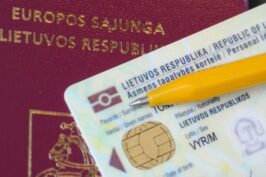
Simplified Lithuanian Citizenship Procedure for Persons of Lithuanian Origin
The institute of the simplified procedure of granting the citizenship of Lithuania is applicable to persons of Lithuanian origin: it provides them a right to become citizens of Lithuania upon exclusion of the naturalization process.
Who Qualifies for Simplified Lithuanian Citizenship?
A person may apply for granting the citizenship of Lithuania according to the simplified procedure, if he (she) is of Lithuanian origin and has the relevant evidences.
According to provisions of Lithuanian legal norms, a person of Lithuanian origin is considered a person whose parents and grandparents or at least one of them are or were Lithuanians, that believes to be a Lithuanian and declares the same by an affidavit. A citizenship of Lithuania may be granted according to the simplified procedure to a person of Lithuanian origin that never was a citizen of Lithuania up to present time. In case of granting the citizenship of Lithuania according to the simplified procedure, the person should renounce his/her citizenship of the foreign state.
Steps to Obtain Lithuanian Citizenship Under the Simplified Procedure
Follow this step-by-step guide to applying for Lithuanian citizenship for individuals of Lithuanian origin:
- Collection of documents;
- Preparation of documents;
- Submission of documents to the Migration department;
- Signing of the Decree of the President of Lithuania;
- Renunciation of existing citizenship and oath to Lithuania;
- Issuance of a Lithuanian passport.
Searching for Documents in Lithuanian Archives
The process of preparation of documents for a granting of citizenship of Lithuania starts from collection of the required data and documents. In case of lack of any data and documents, a search for them shall be carried out at Lithuanian archives and other state institutions as well as other sources. If a search is arranged according to the established procedure, it continues for about a month, in some cases longer; in urgent cases, it may be completed within 5 workdays or within 10 workdays.
Where to Submit Documents for Lithuanian Citizenship under the Simplified Procedure?
The documents for granting the citizenship of Lithuania according to the simplified procedure shall be submitted to the President of Lithuania via the Migration Department or a diplomatic mission/a consular institution of Lithuania in a foreign state.
Required Documents for Simplified Lithuanian Citizenship
The documents for granting the citizenship of Lithuania according to the simplified procedure:
1. The application;
2. The passport;
3. The evidences of Lithuanian origin of the applicant;
4. The document certifying that the applicant is not a citizen of another state;
5. A declaration of the applicant on renouncing the citizenship of the other state after granting the citizenship of Lithuania,
6. A certificate on absence of convictions.
7. A document evidencing the change of name or surname where such personal data have been changed.
Document Translation and Certification Requirements
The documents shall be executed in Lithuanian. If documents are executed in a language other than Lithuanian they shall be translated iinto Lithuanian.
Copies of the documents shall be certified according to the procedure provided in laws. Documents issued in foreign states shall be certified by Apostille or legalized, unless otherwise is provided by international treaties of Lithuania or legal norms of the European Union.
Role of the Migration Department in the Citizenship Process
The Migration Department shall transfer the application for granting the citizenship of Lithuania according to the simplified procedure and the enclosed documents with appendices to the Citizenship Commission under the Ministry of Justice of Republic of Lithuania no later than within 3 months.
President’s Role in Granting Lithuanian Citizenship
The citizenship of Lithuania shall be granted to the person by a decree of the President of Lithuania.
Oath of Allegiance: Final Step to Becoming a Lithuanian Citizen
The person shall swear an oath of allegiance to Lithuania. After the oath, the rights and duties of a citizen of Lithuania appear for the person.
Renouncing Other Citizenship for Lithuanian Citizenship
The simplified procedure for granting Lithuanian citizenship requires the renunciation of any other citizenship. Dual or multiple citizenship is not permitted under this process.
Free Legal Assessment for Lithuanian Citizenship Applications
Get a professional evaluation of your eligibility for Lithuanian citizenship at no cost.
Free Legal Assessment: Lithuanian Citizenship Eligibility
The lawyers of MIGRATION LAW CENTER offer a free legal Assessment (analysis) of your options for obtaining Lithuanian citizenship. To receive a detailed analysis, please complete an application form by clicking this link – FORM.
Following a thorough legal analysis of your options that would allow to obtain Lithuanian citizenship, our lawyers will provide you with a written response (analytical results) regarding your options of obtaining Lithuanian citizenship and further requirements as well as procedure processes.
Can I get free legal advice on Lithuanian citizenship?
Yes, to learn more about Lithuanian citizenship, the process of preparing and submitting documents to competent state institutions, or to order legal assistance, please contact us:
• Email: info@migration.lt
• Phone: +37068563053
If you have any questions regarding Lithuanian citizenship or should you require more information or help, please contact us by e-mail: info@migration.lt or phone: + 370 6 1861886. We will gladly help you.
A certificate cerrtifying a right for reinstatement of the citizenship of Lithuania
A certificate cerrtifying a right for reinstatement of the citizenship of Lithuania is an important document in the processes of reinstatement Lithuanian citizenship and issuing a temporary or permanent residence permit in Lithuania, as well as when submitting an application for a visa to enter Lithuania.
What Is a Certificate for the Right to Reinstate Lithuanian Citizenship?
A certificate cerrtifying a right for reinstatement of the citizenship is a document certifying the facts usable as a base for reinstatement of citizenship of Lithuania and provides a right for reinstatement of the citizenship of Lithuania to the person. This certificate facilitates the process of reinstatement of citizenship of Lithuania and is issued for an unlimited period, so its bearer may apply for reinstatement of citizenship of Lithuania and use the document at any time.
Who Is Eligible for the Certificate?
A certificate certifying a right for reinstatement the citizenship of Lithuania may be issued to a person that is entitled to apply for reinstatement the citizenship of Lithuania according to legal norms of Lithuania and shall be a base for such reinstatement. For reinstatement of the citizenship of Lithuania, may apply persons:
- who were citizens of Lithuania before 15 June 1940; or
- descendents of such persons, i.e. to children, grandchildren and great-grandchildren of persons who were citizens of Lithuania prior to 15 June 1940.
Documents Required to Prove Lithuanian Citizenship Before 1940
To prove Lithuanian citizenship before June 15, 1940, one or more of the following documents must be submitted:
- Lithuanian passports issued before 15 June 1940;
- Documents certifying military service of the person in Lithuanian army or civil service in Lithuania;
- Certificates of Birth or other documents where the citizenship is specified;
- Any certificates issued in Lithuania before 15 June 1940 or certificates issued on the base of documents issued before 15 June 1940.
If the above-listed documents are absent, documents on education, employment or living in Lithuania issued before 15 June 1940 shall be provided.
How to Apply for the Certificate?
Before applying for the certificate, applicants must:
- Gather the necessary documents.
- Request missing records from Lithuanian archives or other institutions.
- Translate any non-Lithuanian documents into Lithuanian.
- Notarize copies of documents.
- Legalize or Apostille documents issued in foreign countries (unless exempted by Lithuanian law or EU regulations).
Where to Submit the Application?
The application and required documents may be submitted to:
- a diplomatic mission or a consular institution in a foreign state – Lithuanian diplomatic missions and Consular institutions;
- the Migration department in Lithuania – Migration department.
Required Documents for the Application
Applicants must provide:
- The application;
- A valid passport;
- The documents certifying that the person was a citizen of Lithuania before 15 June 1940; or
- The documents certifying that the person is a descendant of a person who was a citizen of Lithuania before 15 June 1940;
- The documents certifying the family relationships;
- A document evidencing the change of name or surname where such personal data have been changed;
- 2 photos of the person (40 x 60 mm).
Legalization and Translation of Documents: What You Need to Know
Documents issued in foreign countries must be:
- Translated into Lithuanian
- Legally certified (Apostille or legalization)
- Properly notarized copies submitted
Do I have to submit documents in person?
The person submits the application to issue the Certificate for the Right to Reinstate Lithuanian Citizenship in person. The application is not accepted through a representative. However, parents, as representatives, may submit the application on behalf of their minor child.
Lawyers can assist you in the process of collecting documents in the Lithuanian Archives, as well as in the process of preparing and submitting documents to the Migration Department, but you must be present in person during the visit.
Processing Time
The Migration Department shall pass a decision on issue a certificate certifying a right of the person for reinstatement the citizenship of Lithuania within 6 months from the date of reception of the documents by the Migration Department.
Certificate Collection
Once issued, the applicant may take the certificate certifying a right of the person for reinstatement the citizenship of Lithuania at:
- the diplomatic mission or the consular institution of the foreign state
- the Migration Department in Lithuania.
Benefits of Having a Certificate for the Right to Reinstate Lithuanian Citizenship
- No expiration date – it remains valid indefinitely
- Easier and faster citizenship or residence permit application
- Official recognition of Lithuanian ancestry
- A Basis for the Issuance of a Free Multiple-Entry Schengen Visa
The Role of the Certificate Certifying the Right for Reinstatement of Lithuanian Citizenship in Dual Citizenship and Citizenship Reinstatement Processes
A certificate certifying the right for reinstatement of Lithuanian citizenship plays a crucial role in Lithuania’s citizenship procedures, especially in cases involving Dual citizenship and the reinstatement of citizenship without renouncing current nationality. This official document serves as formal confirmation that an individual is eligible to reclaim Lithuanian citizenship under the law.
For many applicants, this certificate is a key step in the dual citizenship process, allowing them to maintain their existing citizenship while legally acquiring Lithuanian citizenship. It provides legal certainty and simplifies interactions with Lithuanian institutions during the citizenship reinstatement process.
Moreover, the certificate supports applicants in the reinstatement of Lithuanian citizenship by confirming their right without the requirement to give up their current nationality, aligning with Lithuania’s evolving policies on dual citizenship. This is particularly important for Lithuanian descendants and former citizens who wish to reconnect with their heritage while preserving their original citizenship status.
In summary, obtaining this certificate not only facilitates a smoother reinstatement process but also enhances applicants’ ability to benefit from Lithuania’s provisions for dual citizenship, making it a vital document for those seeking to reinstate their Lithuanian nationality.
Can I get free legal advice on Certificate for the Right to Reinstate Lithuanian Citizenship?
Yes, to learn more about Certificate for the Right to Reinstate Lithuanian Citizenship, the process of preparing and submitting documents to competent state institutions, or to order legal assistance, please contact us:
• Email: info@migration.lt
• Phone: +37068563053
If you have any questions regarding Lithuanian citizenship or should you require more information or help, please contact us by e-mail: info@migration.lt or phone: + 370 6 1861886. We will gladly help you.
Lithuanian Descent Certificate: Overview
A Certificate of Lithuanian descent is an important document in the processes of Granting the citizenship of Lithuania according to the simplified procedure and issuing a temporary or permanent residence permit in Lithuania, as well as when submitting an application for a visa to enter Lithuania.
What Is a Certificate of Lithuanian Descent?
This document is issued to individuals of Lithuanian origin. It is a document usable as an evidence of Lithuanian origin of the person that facilitates accessibility to granting the citizenship of Lithuania according to the simplified procedure or issue a Permanent (Temporarily) Residence Permit.
Why Do You Need a Certificate of Lithuanian Descent?
If a person strives to be granted the citizenship of Lithuania according to the simplified procedure or issue a Permanent (Temporarily) Residence Permit on the base of his (her) Lithuanian origin, he (she) should prove to be of Lithuanian origin. If a person holds this certificate, the process of proving becomes considerably easier and the process of granting the citizenship of Lithuania or issue a Residence Permit becomes shorter.
How Long Is the Certificate of Lithuanian Descent Valid?
The period of validity of a certificate of Lithuanian descent is termless, so the person may use the advantages provided by the document in later periods as well.
Who Qualifies for a Certificate of Lithuanian Descent?
A person of Lithuanian descent is a person who believes to be a Lithuanian and declares the same in writing and whose parents and/or grandparents or at least one of them was of Lithuanian origin.
Documents Proving Lithuanian Descent
In the process of issuing a certificate of Lithuanian descent, documents certifying Lithuanian descent of the person are required, so the process should be started from collection of such documents. Documents certifying Lithuanian descent of a person are legal documents certifying that parents and/or grandparents of the person or at least one of them was of Lithuanian descent.
These may include:
- Passports
- Birth certificates
- Marriage certificates
- Other legal documents proving Lithuanian ancestry
How to Apply for a Certificate of Lithuanian Descent?
On applying for issue a certificate of Lithuanian descent, the person shall submit the following documents:
- The application;
- The passport;
- Two photos 40×60 mm;
- The evidences of Lithuanian descent of the Applicant;
- The declaration that the person believes to be Lithuanian;
- The documents certifying the family connections;
- A document evidencing the change of name or surname where such personal data have been changed.

Legalization and Translation of Documents: What You Need to Know
Documents issued in foreign countries must be:
- Translated into Lithuanian
- Legally certified (Apostille or legalization)
- Properly notarized copies submitted
Where to Submit Your Application?
A person shall submit the documents for issue a certificate of Lithuanian descent to:
- a diplomatic mission or a consular institution in a foreign state – Lithuanian diplomatic missions and Consular institutions;
- the Migration department in Lithuania – Migration department.
Do I have to submit documents in person?
The person submits the application to issue the certificate confirming the Lithuanian descent in person. The application is not accepted through a representative. However, parents, as representatives, may submit the application on behalf of their minor child.
Lawyers can assist you in the process of collecting documents in the Lithuanian Archives, as well as in the process of preparing and submitting documents to the Migration Department, but you must be present in person during the visit.
Processing Time for a Certificate of Lithuanian Descent
According to Lithuanian legal norms, the duration of examination of the documents by the Migration Department shall be 6 months from the date of their submission.
How to Collect Your Lithuanian Descent Certificate?
The applicant may take the certificate of Lithuanian descent at:
- the Migration Department
- the diplomatic mission or the consular institution of the foreign state
Benefits of Having a Certificate of Lithuanian Descent
- No expiration date – it remains valid indefinitely
- Easier and faster citizenship or residence permit application
- Official recognition of Lithuanian ancestry
Can I get free legal advice on Certificate of Lithuanian Descent?
Yes, to learn more about Certificate of Lithuanian Descent, the process of preparing and submitting documents to competent state institutions, or to order legal assistance, please contact us:
• Email: info@migration.lt
• Phone: +37068563053
If you have any questions regarding Lithuanian citizenship or should you require more information or help, please contact us by e-mail: info@migration.lt or phone: + 370 6 1861886. We will gladly help you.

Restoration of Lost Lithuanian Citizenship
Restoration of lost Lithuanian citizenship is a legal pathway available to individuals who were once citizens of the Republic of Lithuania but lost their citizenship due to acquiring another nationality or other circumstances defined by law. This process allows eligible persons to regain their Lithuanian citizenship.
The right to restore Lithuanian citizenship is especially relevant for those with strong personal or familial ties to Lithuania, such as individuals born in Lithuania or those who held citizenship after March 11, 1990, when Lithuania restored its independence. This restoration process is regulated by the Law on Citizenship of the Republic of Lithuania and involves several legal and procedural steps, including documentation, residence conditions, and government approval.
Understanding the eligibility criteria and preparing the necessary documentation properly is essential to successfully navigating the restoration process.
Who Can Apply for Citizenship Restoration?
If a person was a citizen of Lithuania and lost the Lithuanian citizenship, it may be restored. If a person acquired a Lithuanian citizenship at birth, or his (her) citizenship of Lithuania was restored or granted according to the simplified procedure, or the person acquired the citizenship of Lithuania according to the procedure of naturalization and then lost it for certain circumstances (such as acquisition of a citizenship of another state), such a person may apply for restoration of the lost Lithuanian citizenship .
Requirements Based on Former Citizenship Status
The requirements set for persons wishing to apply for restoration of the lost Lithuanian citizenship differ dependently on the way of acquisition of the citizenship by the person before its losing.
Applicants Who Acquired Lithuanian Citizenship by Birth or Simplified Procedure
If a person wishing to apply for restoration of the lost citizenship of Lithuania had acquired a citizenship of Lithuania at birth, or his (her) citizenship of Lithuania was restored or granted according to the simplified procedure, he (she) should renounce the current citizenship of the other state, except of certain exceptional cases, when the person has a right to be a citizen of Lithuania and a citizen of another state (a person having acquired a citizenship of Lithuania at birth, a person having been exiled from Lithuania or having left Lithuania prior to 11 March 1990 or a person is a descendant of such persons etc.).
Applicants Who Lost Lithuanian Citizenship Acquired by Naturalization
For a person wishing to apply for restoration of the lost citizenship of Lithuania who had acquired the citizenship of Lithuania according to the procedure of naturalization and then lost it, the following requirements are set: renouncing the current citizenship of the other state, lawful permanent residing in Lithuania for the recent 5 years, having a right for permanent residence in Lithuania, having a legal source of means of subsistence and absence of any circumstances that exclude an eligibility of a person for restoration of Lithuanian citizenship.
Who Is Not Eligible for Restoration of Citizenship?
A person will not be eligible for a restoration of the lost Lithuanian citizenship, if he (she):
- Had committed international crimes or prepared himself (herself) for them or tried to commit them;
- Had committed criminal acts against Lithuania or prepared himself (herself) for them or tried to commit them;
- Was imprisoned for an intentional crime that is considered an extremely serious crime according to Lithuanian laws;
- Has no right for permanent residence in Lithuania.
Where to Submit Your Application
The documents for a restoration of the lost Lithuanian citizenship shall be submitted to:
The documents shall be submitted to:
- a diplomatic mission or a consular institution in a foreign state – Lithuaniandiplomatic missions and Consular institutions;
- the Migration department in Lithuania – Migration department.
Required Documents for Citizenship Restoration
For a restoration of the lost Lithuanian citizenship, the following documents shall be submitted:
-
The application;
-
The passport;
-
A document evidencing the change of name or surname where such personal data have been changed;
-
A document on an absence of a citizenship of another state or a declaration on his (her) obligation to renounce the citizenship of the other state after restoration of the lost Lithuanian citizenship.
Additional Documents for Former Naturalized Citizens
If a person acquired the citizenship of Lithuania according to the procedure of naturalization and then lost it, he (she) shall submit the following documents in addition to the above-listed:
-
A document certifying his/her right for permanent residence in Lithuania;
-
Documents certifying that his (her) lawful permanent residing in Lithuania for the recent 5 years;
-
Documents certifying that the person has a legal source of means of subsistence;
-
A certificate on absence of convictions.
Translation and Legalization Requirements
If documents are executed in a language other than Lithuanian they shall be translated into Lithuanian. Copies of the documents shall be notarized. Documents issued in foreign states shall be certified by Apostille or legalized, unless otherwise is provided by international treaties of Lithuania or legal norms of the European Union.
Processing Time and Final Decision
The Migration Department shall examine the Application for restoration of the lost citizenship of Lithuania for a period up to 3 months. The conclusion of the Migration Department shall be transferred to the Citizenship Board. The lost citizenship of Lithuania shall be restored to the person by a decree of the President of Lithuania and the person shall swear an oath of allegiance to Lithuania.
Although the Migration Department reviews the application within 3 months, the entire process—from document submission to receiving the presidential decree and taking the oath—may take up to 12 months in total. This duration can vary depending on individual case complexity, completeness of documentation, and the workload of the involved institutions.
Difference Between Restoration and Reinstatement of Lithuanian Citizenship
It is important to distinguish between restoration and reinstatement of Lithuanian citizenship, as these are two separate legal procedures under Lithuanian law.
-
Restoration of Lost Lithuanian Citizenship applies to individuals who were citizens of Lithuania after 11 March 1990 and lost their citizenship due to acquiring another citizenship or for other specific reasons. These individuals may apply for restoration of their Lithuanian citizenship based on previously held status.
-
Reinstatement of Lithuanian citizenship, on the other hand, applies to individuals who were not citizens of Lithuania after 11 March 1990, but whose ancestors (parents, grandparents, or great-grandparents) were citizens of the Republic of Lithuania prior to 15 June 1940. The applicant or their ancestors must have either left Lithuania before 11 March 1990 or were deported from Lithuania.
In the process of Reinstatement Lithuanian citizenship, the applicant must provide documentary evidence proving their Lithuanian ancestry and that their family lineage was affected by emigration or deportation during the 20th century.
This distinction is crucial when preparing an application, as the required documentation, eligibility criteria, and legal implications vary significantly between the two processes.
Need Help with Restoration of Lost Lithuanian Citizenship?
If you have any questions regarding Lithuanian citizenship or should you require more information or help, please contact us by e-mail: info@migration.lt or phone: +370 6 1861886. We will gladly help you.

Persons of Lithuanian origin and persons having a right for restoration of Lithuanian citizenship are entitled not only to be granted a citizenship of Lithuania according to a simplified procedure and issued a document certifying their Lithuanian origin or a certificate confirming their right for restoration of Lithuanian citizenship, but also have a right to apply for issue a Temporary Residence Permit in Lithuania or a Permanent Residence Permit in Lithuania and for issue a Schengen visa.
A person of Lithuanian origin is a person whose parents or grandparents or at least one of them were or are of Lithuanian origin and who self-identifies him(her)self as a Lithuanian and declares the same in a written declaration. A person having a right for restoration of Lithuanian citizenship is a person who was or whose parents, grandparents, forefathers or one of them were citizens of Lithuania before 15 June 1940.
Persons of Lithuanian origin have a right:
1. To apply for granting the citizenship of Lithuania according to the simplified procedure;
2. To apply for issue a document certifying his (her) Lithuanian origin;
3. To apply for issue a Temporary Residence Permit in Lithuania or a Permanent Residence Permit in Lithuania;
4. To apply for issue a Schengen visa for coming to Lithuania.
A person having a right for restoration of Lithuanian citizenship has a right:
1. To restore Lithuanian citizenship upon renunciation of the citizenship of the other state or without a necessity of such a renunciation;
2. To apply for issue a certificate confirming his (her) right for a restoration of Lithuanian citizenship;
3. To apply for issue a Temporary Residence Permit in Lithuania or a Permanent Residence Permit in Lithuania;
4. To apply for issue a Schengen visa for coming to Lithuania.
A person of Lithuanian origin or person having a right for restoration of Lithuanian citizenship may come to Lithuania with a Schengen visa and stay in Lithuania for up to 3 months as well as travel in the Schengen space or stay in any other Schengen state for no longer than for 3 months. If a person intends to stay in Lithuania for a period over 3 months, he (she) should apply for issue a Residence Permit. Persons of Lithuanian origin and persons having a right for restoration of Lithuanian citizenship have a right to apply for issue a Temporary Residence Permit in Lithuania or a Permanent Residence Permit in Lithuania. Each of the said Permits is issued for a 5-year period. Only the procedures of issue and the lists of the documents to be submitted differ.
Documents confirming Lithuanian origin point out that the person’s parents or grandparents or at least one of them were of Lithuanian origin (certificates of birth and other documents).
A citizenship of Lithuania before 15 June 1940 is confirmed by the following documents:
1. Lithuanian passports issued before 15 June 1940;
2. Documents certifying military service of the person in Lithuanian army or civil service in Lithuania;
3. Certificates of Birth or other documents where Lithuanian citizenship is specified;
4. Any certificates issued in Lithuania before 15 June 1940 or certificates issued on the base of documents issued before 15 June 1940.
If the above-listed documents are absent, documents on education, employment or living in Lithuania issued before 15 June 1940 shall be provided.
The documents for issue a Residence Permit in Lithuania may be submitted to a diplomatic mission or a consular institution in a foreign state or to the Migration Service in Lithuania. A resolution on issue a Residence Permit in Lithuania shall be passed by the Migration Department within 2 to 4 months.

Business immigration is one of the bases for immigration to Lithuania.
Latterly, regulation of business immigration is dynamic. A particular attention is paid to real business running, involvement in business running and enterprise ostensibility control.
In case of business immigration, principal requirements are related to the size of the net worth of the enterprise, the composition of the staff, the sizes of their salaries, the working time and execution of the activities.
According to legal norms of Republic of Lithuania, an alien may apply for issue a Residence Permit in Lithuania on the base of running a business in Lithuania and an intention to continue the same, if the following requirements are satisfied:
1. An alien is a head or a shareholder of a Lithuanian enterprise and the par value of shares of the enterprise owned by the alien forms at least 1/3 of the shares of the enterprise;
2. The equity of the enterprise is no less than 28’000 EUR, including 14’000 EUR invested by the alien;
3. At the Lithuanian enterprise, citizens of Lithuania, another European Union Member State or a Member State of the European Free Trade Association or aliens permanently residing in Lithuania are employed on full-time basis and their monthly salaries (of all of them) are no less that 2 average monthly salaries in Lithuania;
4. The Lithuanian enterprise is engaged in its activities for at least 6 last months prior to the application for issue a Residence Permit in Lithuania.
If the above-listed requirements are satisfied, the person may apply for issue a Temporary Residence Permit in Lithuania. A Temporary Residence Permit in Lithuania may be issued for 2 years. Simultaneously, members of the family of the alien may apply for issue a Temporary Residence Permit in Lithuania as well.

Lithuanian Citizenship for Children: Conditions, Documents, and Dual Citizenship Rights
The growing number of mixed families—where one parent is a Lithuanian citizen and the other is a foreign national—combined with ongoing emigration from Lithuania, has made questions regarding Lithuanian citizenship for children increasingly important.
Issues such as confirming Lithuanian citizenship, understanding eligibility, and managing dual citizenship rights are especially relevant for families both in Lithuania and abroad.
Citizenship by Birth: How a Child Acquires Lithuanian Citizenship
The legal norms of Lithuania regulate the problems of the citizenship of children on the base of filiation, i.e. a child acquires the citizenship of Lithuania by birth. Acquiring Lithuanian citizenship by birth is the primary way of obtaining Lithuanian citizenship. On regulation of the problems of the citizenship of children in Lithuania, a priority is provided to the right of blood principle (jus sanguinis), i.e. a child acquires the citizenship of the parents, independently on the place of birth (within the territory of Lithuania or out of it).
Cases When a Child Acquires Lithuanian Citizenship by Birth
The cases when a child acquires the citizenship of Lithuania by birth independently on the state of birth include:
-
Both parents are citizens of Lithuania.
-
One parent is a citizen of Lithuania.
-
One parent was a citizen of Lithuania but passed away before the child’s birth.
-
The parents are stateless persons who permanently reside in Lithuania, and the child has not acquired another citizenship.
-
One parent is stateless and permanently resides in Lithuania, and the other parent is unknown, with the child not having acquired another citizenship.
Lithuanian Citizenship Documentation for Children
The citizenship of children born after the entry into force of the Law of the Republic of Lithuania on Citizenship (1 April 2011) is recorded in the child’s birth certificate at the time of registration.
Children born between 22 July 2008 and 11 April 2011 have their citizenship recorded in the Lithuanian Population Register, which issues a certificate confirming citizenship.
Before applying for a Lithuanian passport for a child, a birth certificate must be obtained. Birth certificates are issued by civil registry offices, while passports are issued by the Migration Department of Lithuania or Lithuanian embassies abroad.
Dual Citizenship and Lithuanian Citizenship for Children Born Abroad or to Mixed Families
As the number of Lithuanians residing abroad and children born abroad or to mixed-nationality families grows, the issue of dual citizenship becomes increasingly relevant.
According to current Lithuanian law, a child may hold both Lithuanian citizenship for children and the citizenship of another country if:
-
Lithuanian citizenship is acquired by birth (one or both parents were Lithuanian citizens at the time of birth), and
-
Citizenship of another state is acquired by birth or by other legal means before the child turns 18.
The previous requirement for children to choose one citizenship at age 21 no longer applies (more information: Dual children citizenship).
Key Points to Remember
-
Lithuanian citizenship for children is primarily based on the parents’ citizenship (jus sanguinis).
-
Birthplace does not affect the child’s eligibility.
-
All documents issued in languages other than Lithuanian must be translated and legalized or apostilled according to Lithuanian law.
-
Children born to mixed-nationality families can hold dual citizenship, but rules depend on how the other citizenship is acquired.
Need Help Confirming Your Child’s Lithuanian Citizenship?
Not sure if your child qualifies for Lithuanian citizenship for children? We offer a free initial legal assessment of your child’s case by email.
Get a professional evaluation: info@migration.lt
New Law Amendments on Dual Citizenship (Effective 01 January 2021)
As of 1 January 2021, amendments to the Republic of Lithuania Law on Citizenship came into force, granting the right to dual (multiple) citizenship for all minors who acquire Lithuanian citizenship by birth.
According to the new provisions, all minors under 18 years old who acquire Lithuanian citizenship by birth are entitled to hold both Lithuanian citizenship and the citizenship of another country, regardless of whether the other citizenship was acquired by birth or later, up until they turn 18.
Citizenship Confirmation for Persons Born Between 1990–2008
Persons born between 11 March 1990 and 21 July 2008 to at least one parent who was a citizen of the Republic of Lithuania may be entitled to Lithuanian citizenship by birth. In many cases, however, the issue of Lithuanian citizenship was not formally resolved during childhood due to living abroad, lack of information, or previous administrative practice.
Lithuanian law now provides a clear legal mechanism to confirm Lithuanian citizenship even after reaching adulthood. This procedure allows eligible individuals to apply for recognition as citizens of the Republic of Lithuania, regardless of whether the application was submitted before or after the age of 18.
Below, we explain who is eligible, how the procedure works, what documents are required, and whether dual citizenship is permitted in such cases.
Can Lithuanian Citizenship Be Confirmed After the Age of 18?
Yes. Under current Lithuanian law, individuals whose Lithuanian citizenship status was not resolved before reaching adulthood may apply after the age of 18 to be recognized as citizens of the Republic of Lithuania.
This is a significant change from earlier legal practice, under which it was believed that the issue of a child’s Lithuanian citizenship had to be resolved before the age of 18. As a result, many individuals born abroad to Lithuanian parents were previously unable to confirm their Lithuanian citizenship. This is no longer the case.
Who Is Eligible to Apply After the Age of 18?
You may apply for confirmation of Lithuanian citizenship if all of the following conditions are met:
-
You were born between 11 March 1990 and 21 July 2008;
-
At the time of your birth, one or both of your parents were citizens of the Republic of Lithuania;
-
You acquired the citizenship of another country at birth or before the age of 18;
-
The issue of your Lithuanian citizenship was not examined or resolved before you turned 18.
This provision is particularly relevant for members of the Lithuanian diaspora who were born and raised abroad and whose parents did not arrange Lithuanian citizenship documentation during childhood.
Dual Citizenship After the Age of 18
Dual (multiple) citizenship is allowed in these cases.
You are entitled to retain dual citizenship for life if:
-
Lithuanian citizenship was acquired by birth, and
-
Another country’s citizenship was acquired by birth or before the age of 18 (including cases where it was acquired not by birth).
This commonly applies to individuals born in countries such as the United States, Canada, the United Kingdom, Australia, and other states granting citizenship by birth or during childhood.
How to Submit the Application
The application must be submitted electronically via the MIGRIS system.
After submitting the application, you must:
-
Appear in person within 4 months at the Migration Department in Lithuania or at a Lithuanian consulate abroad, or
-
Have the documents submitted by an authorized representative in Lithuania.
If the original documents are not submitted within the prescribed time limit, the application will be considered invalid.
Lithuanian Citizenship for Children: Required Documents and Procedures
To confirm Lithuanian citizenship after the age of 18, the following documents must be submitted:
-
A valid passport;
-
Documents proving the family relationship with your parent(s);
-
Documents confirming that one or both parents were citizens of the Republic of Lithuania at the time of your birth;
-
Documents confirming the acquisition of another country’s citizenship at birth or before the age of 18, such as:
-
an official foreign document stating that you have been a citizen of that country since birth;
-
a foreign passport issued before the age of 18;
-
other equivalent evidence.
-
Translation and Legalization Requirements
-
All documents must be translated into Lithuanian;
-
Translations must be certified by a qualified translator;
-
Foreign documents must be legalized or certified with an Apostille, except for documents issued by Latvia, Estonia, Ukraine, Moldova, and in certain humanitarian situations.
Key Rules
| Question | Answer |
|---|---|
| Can you apply after the age of 18? | Yes |
| Who is eligible? | Persons born between 1990-03-11 and 2008-07-21 whose parent(s) were Lithuanian citizens at birth |
| Is dual citizenship allowed? | Yes, if Lithuanian citizenship was acquired by birth |
| Is a physical visit required? | Yes – Migration Department, consulate, or authorized representative |
| Is Apostille required? | Yes, in most cases |
For a detailed explanation of the legal background, eligibility criteria, and practical application steps, please see our article Can a Child Obtain Lithuanian Citizenship After the Age of 18?.

Lithuanian Citizenship for Children Born After 22 July 2008
If a child was born after 22 July 2008 and acquired Lithuanian citizenship at birth, the child’s parents may apply for a Lithuanian passport for their child.
For children born abroad, the child’s birth must first be registered in Lithuania, and the birth must be recorded in the Lithuanian civil registry system.
Free Initial Consultation
Not sure if your child qualifies for Lithuanian Citizenship for Children? We offer a free initial legal assessment of your child’s case by email.
Get a professional evaluation: info@migration.lt
Issuance of Lithuanian Passport for a Child
After Lithuanian citizenship is confirmed or acquired by birth, parents may apply for the issuance of a Lithuanian passport or identity card for the child.
The passport is issued by the Migration Department in Lithuania or by a Lithuanian diplomatic mission/consulate abroad.
Prior to applying for a passport, the child’s birth must be registered in Lithuania and the birth record must be entered into the Lithuanian civil registry system.
For detailed instructions, documents and procedures, see:
-
Issuance of a Lithuanian Passport for a Child Born Abroad – step-by-step guide for parents.
-
Lithuanian Passport: Order of Issuing and Deadlines – official deadlines and requirements.
-
Registration of Child Birth Born Abroad in Lithuanian Civil Records – how to include your child’s birth in the Lithuanian registry.
Special Cases of Citizenship Acquisition by Children
Children With Unknown, Missing, or Incapacitated Parents
If a child’s parents (or one parent) are unknown, deceased, missing, or legally incapacitated, or if parental authority is restricted:
-
A child found or residing in Lithuania is considered born in Lithuania and acquires Lithuanian citizenship, provided the child does not have another citizenship.
Situations include:
-
Parents unknown
-
Parents deceased
-
Parents recognized as missing
-
Parents recognized as legally incapable
-
Parental authority restricted and the child is under tutelage/wardship
Citizenship of Adopted Children
-
A child adopted by Lithuanian citizens acquires Lithuanian citizenship at the time of adoption.
-
If a child with Lithuanian citizenship is adopted by foreign citizens, the child retains Lithuanian citizenship, regardless of whether they acquire another citizenship.
-
A child adopted by one Lithuanian citizen and one foreign citizen may hold dual citizenship until age 21.
-
Since 31 October 2018, the requirement to choose citizenship at age 21 no longer applies.
More information: Dual citizenship for adopted children in Lithuania
Citizenship When Parents Regain Lithuanian Citizenship
-
If a child’s parents reacquire Lithuanian citizenship, the child also acquires Lithuanian citizenship if they are under 14 years old.
-
Children aged 14–18 must provide written consent to acquire Lithuanian citizenship.
-
Such children can hold only Lithuanian citizenship unless dual citizenship is allowed under other provisions.
Need Assistance?
Our team specializes in Lithuanian citizenship for children cases and can guide you through all legal requirements, documents, and procedures.
If you have any questions regarding Lithuanian citizenship for children or need more information, please contact us:
-
Email: info@migration.lt
-
Phone: +370 6 8563053
We will gladly guide you through the process.


One of the bases for immigration to Lithuania is an intention of an alien to study in Lithuania.
If an alien wishes to study in Lithuania, he (she) shall, first of all, choose an education institution and a study programme. If the alien satisfies all the requirements set by the education institution for admittance as well as any other requirements, the alien may apply for issue a Temporary Residence Permit in Lithuania on the base of his (her) intention to study in Lithuania. The documents for issue a Residence Permit in Lithuania may be submitted to a diplomatic mission or a consular institution in a foreign state or to the Migration Service in Lithuania.


Naturalization
Naturalization is one of the main legal pathways to obtain Lithuanian citizenship for foreign nationals who have resided in Lithuania long-term. This process allows individuals who meet specific residency, legal, and language requirements to become Lithuanian citizens. If you have legally and permanently lived in Lithuania for a number of years, and can demonstrate integration into Lithuanian society, you may be eligible to apply for Lithuanian citizenship through naturalization. Below, we explain the key criteria, required documents, and legal procedures involved in this process.
Eligibility for Lithuanian Citizenship by Naturalization
If Lithuania is a place of lawful permanent residence of a person for over 10 years and such a person satisfies other requirements provided in legal norms, the person acquires a right to be granted the citizenship of Lithuania according to the procedure of naturalization.
What Qualifies as Permanent Residence in Lithuania?
Permanent residence of a person in the country means that the person resides in Lithuania without breaks for at least six months per year. If a person strives for recognition of his (her) residence in Lithuania permanent, such a person should not leave Lithuania for staying in another state for a period over six months.
Legal Requirements for Lithuanian Citizenship by Naturalization
Other requirements applicable to a person striving for acquiring the citizenship of Lithuania according to the procedure of naturalization include: having a legal source of means of subsistence; a successful result of an examination in the basics of Lithuanian language and the Constitution of Lithuania; an absence of convictions; and an absence of a citizenship of another state.
Language and Constitution Exam Requirement
If a person wishes to obtain Lithuanian citizenship through naturalization, they must, in addition to fulfilling other legal requirements, pass an examination on the basics of the Lithuanian language and the Constitution of the Republic of Lithuania.
Contact Information for the Lithuanian Language and Constitution Examination
For detailed information regarding the Lithuanian language and the basics of the Constitution of the Republic of Lithuania examination, please contact the National Agency for Education (Nacionalinė švietimo agentūra):
-
Address: K. Kalinausko g. 7, LT-03107 Vilnius, Lithuania
-
Phone: +370 658 18504
-
Email: info@nsa.smm.lt
-
Website: www.nsa.smm.lt
Please note: Previously, the exams were organized by the Education Development Center. Since September 1, 2019, the responsibility for administering these exams has been transferred to the National Agency for Education.
To register for the exams, applicants must use the MIGRIS electronic system managed by the Migration Department of Lithuania:
-
Registration portal: www.migracija.lt
For the most up-to-date exam schedules, preparation materials, and guidelines, please visit the official website of the National Agency for Education.
Criminal Record and National Security Check
To ensure the national security, the information on convictions of a person striving for acquiring the citizenship of Lithuania according to the procedure of naturalization shall be verified and the person shall submit the relevant document. It shall be a certificate issued in the country where the person lived prior to residence in Lithuania to certify that the person was not imprisoned for an intentional crime that is considered an extremely serious crime according to Lithuanian laws or a document issued to certify that he was not imprisoned for an extremely serious crime in Lithuania.
Disqualification Criteria for Naturalization in Lithuania
A person will not be eligible for granting Lithuanian citizenship, if he (she):
- Had committed international crimes (such as aggression, genocide, crimes against humanity, military crimes etc.) or prepared him (her) for them or tried to commit them;
- Had committed criminal acts against Lithuania or prepared him (her) for them or tried to commit them;
- Was imprisoned for an intentional crime that is considered an extremely serious crime according to Lithuanian laws;
- Has no right to obtain a document certifying his (her) right for permanent residence in Lithuania.
Renunciation of Previous Citizenship
If a person wishes to acquire the citizenship of Lithuania according to the procedure of naturalization, he (she) should have no citizenship of another state or shall lose the citizenship of another state after granting the citizenship of Lithuania or declare in writing that he (she) will renounce the citizenship of the other state.
Where to Submit Your Application and Documents
The documents for granting the citizenship of Lithuania according to the procedure of naturalization shall be submitted to the Migration department office.
Translation and Legalization of Documents
If the documents to be submitted are executed in a language other than Lithuanian, they shall be translated into Lithuanian and certified according to the procedure provided in laws. Documents issued by institutions of foreign states shall be certified by Apostille or legalized, unless otherwise is provided by international treaties of Lithuania or legal norms of the European Union.
Document Requirements for Naturalization
For an acquisition of Lithuanian citizenship according to the procedure of naturalization, the following documents shall be submitted:
- The application completed in Lithuanian;
- The passport;
- A document certifying his/her right for permanent residence in Lithuania;
- Documents certifying that lawful permanent residing of the person in Lithuania for at least 10 years;
- Documents certifying that the person has a legal source of means of subsistence;
- A document on a successful result of an examination in the basics of Lithuanian language and the Constitution of Lithuania;
- A certificate on absence of convictions.
Naturalization for Spouses of Lithuanian Citizens
Shortened Residency Requirement for Spouses
If an alien having registered a marriage with a citizen of Lithuania wishes to be granted the citizenship of Lithuania according to the procedure of naturalization, a shortened period or permanent residence in Lithuania shall be applied. A citizen of a foreign state whose husband or wife is a citizen of Lithuania shall acquire the citizenship of Lithuania according to the procedure of naturalization after 7-year permanent lawful living in a marriage with a citizen of Lithuania in Lithuania. If a marriage a marriage of a citizen of a foreign state was registered with a former deportee, political prisoner or a descendant of such persons, as well as if the Lithuanian spouse dies after over 1 year of the marriage, the spouse from a foreign state shall acquire the citizenship of Lithuania according to the procedure of naturalization after 5-year permanent residence in Lithuania.
Required Documents for Spouses Applying for Citizenship
For acquisition of the citizenship of Lithuania, an alien having registered a marriage with a citizen of Lithuania shall submit the following documents:
- The application completed in Lithuanian;
- The passport;
- The passport of the spouse (a citizen of Lithuania);
- The Certificate of Marriage;
- A document certifying his/her right for permanent residence in Lithuania;
- Documents certifying that he (she) lived permanently with the spouse (a citizen of Lithuania) in Lithuania for last 7 or 5 years;
- Documents on a successful result of an examination in the basics of Lithuanian language and the Constitution of Lithuania;
- Documents certifying that the alien is not a citizen of another state or will lose the current citizenship (if any) after granting the citizenship of Lithuania, or a declaration on renouncing the current citizenship of another state after granting the citizenship of Lithuania;
- A certificate on absence of convictions;
- In certain cases – the documents certifying that the spouse of the alien is a former deportee, political prisoner or a child of such persons born in exile, or the documents certifying a death of the spouse.
Review Timeline and Citizenship Approval
The documents submitted by the person shall be examined by the Migration Department and transferred to the Citizenship Affairs Commission no later than within 3 months from the date of submission of the documents.
Although the Migration Department reviews the application within 3 months, the entire process—from document submission to receiving the presidential decree and taking the oath—may take up to 12 months in total. This duration can vary depending on individual case complexity, completeness of documentation, and the workload of the involved institutions.
Presidential Decree and Oath of Allegiance
The citizenship of Lithuania shall be granted to the person by a decree of the President of Lithuania and the person shall swear an Oath of allegiance to Lithuania. After the oath, the person is granted the rights and duties of a citizen of Lithuania. If the person has not sworn, his (her) application for granting Lithuanian citizenship may be examined for a second time, if the term of swearing was missed because of very important reasons.
Need Help With Lithuanian Citizenship?
If you have any questions regarding Lithuanian citizenship or should you require more information or help, please contact us by e-mail: info@migration.lt or phone: + 370 6 1861886. We will gladly help you.
Lithuanian Citizenship by Marriage: What Foreign Spouses Need to Know
As the number of mixed-nationality families continues to grow, the issues of Dual citizenship and the possibility of acquiring Lithuanian citizenship through marriage are becoming increasingly relevant for foreign spouses of Lithuanian citizens.
Lithuanian Citizenship Eligibility for a Foreign Spouse
If a citizen of Lithuania registers a marriage with a citizen of a foreign state, the foreign spouse (husband or wife) may be granted Lithuanian citizenship after 7 years of permanent residence in Lithuania together with the Lithuanian citizen spouse.
After completing 7 years of permanent residence, the spouse of a Lithuanian citizen may apply for naturalization and acquisition of Lithuanian citizenship.
Free Initial Consultation
Not sure if you qualify for Lithuanian citizenship by marriage? We offer a free initial legal assessment of your case by email.
Get a professional evaluation: info@migration.lt
Exceptions: When Citizenship May Be Granted Sooner
In certain legally defined cases, a foreign spouse may apply for Lithuanian citizenship earlier than 7 years. For example, citizenship may be granted after 5 years of permanent residence if:
-
The marriage is registered with a former deportee, political prisoner, or a child of such persons born in exile, or
-
The foreign spouse resided permanently in Lithuania with a Lithuanian citizen spouse who has deceased, for at least one year prior to the application.
Residence in Lithuania is considered permanent if the person does not leave Lithuania for a period exceeding 6 months per year.
Lithuanian Language and Constitution Exam Requirements
A foreign spouse applying for Lithuanian citizenship must, in addition to other legal requirements, pass examinations in:
-
The basics of the Lithuanian language, and
-
The Constitution of the Republic of Lithuania.
Contact Information for the Lithuanian Language and Constitution Examination
For detailed information regarding the Lithuanian language and the basics of the Constitution of the Republic of Lithuania examination, please contact the National Agency for Education (Nacionalinė švietimo agentūra):
-
Address: K. Kalinausko g. 7, LT-03107 Vilnius, Lithuania
-
Phone: +370 658 18504
-
Email: info@nsa.smm.lt
-
Website: www.nsa.smm.lt
Please note: Previously, the exams were organized by the Education Development Center. Since September 1, 2019, the responsibility for administering these exams has been transferred to the National Agency for Education.
To register for the exams, applicants must use the MIGRIS electronic system managed by the Migration Department of Lithuania:
-
Registration portal: www.migracija.lt
For the most up-to-date exam schedules, preparation materials, and guidelines, please visit the official website of the National Agency for Education.
Translation and Legalization of Documents
Prior to submission, all documents issued in a language other than Lithuanian must be officially translated into Lithuanian in accordance with Lithuanian legal requirements.
Documents issued by foreign state institutions must be certified with an Apostille or legalized, unless otherwise is provided by international treaties of Lithuania or legal norms of the European Union.
Required Documents for Lithuanian Citizenship by Marriage
A foreign national married to a Lithuanian citizen must submit the following documents for naturalization:
-
Application form (completed in Lithuanian);
-
Valid passport;
-
Passport of the Lithuanian citizen spouse;
-
Marriage certificate;
-
Document confirming the right of permanent residence in Lithuania;
-
Documents proving continuous cohabitation with the Lithuanian spouse in Lithuania for the required period;
-
Certificates confirming successful completion of the Lithuanian language and Constitution exams;
-
Documents confirming that the applicant does not hold another citizenship, or will lose it upon acquiring Lithuanian citizenship, or a declaration of renunciation of current citizenship;
-
Certificate of no criminal record;
-
In specific cases – documents confirming deportation status, political repression, exile, or death of the spouse.
Documents are submitted to the Migration Department of Lithuania.
Application Processing Timeline
The Migration Department transfers applications for Lithuanian citizenship by naturalization to the Citizenship Affairs Commission within 3 months from the date of submission.
Although the initial review is completed within this period, the full process — from document submission to receiving the Presidential Decree and taking the Oath of Allegiance to the Republic of Lithuania — may take up to 12 months, depending on case complexity, document completeness, and institutional workload.
Dual Citizenship and Marriage to Foreign Citizens
When a Lithuanian citizen registers a marriage with a foreign citizen, the foreign citizenship may be:
-
Granted automatically, or
-
Acquired through a formal application process.
If the foreign citizenship is granted automatically (a practice more common in certain legal systems), the person may legally retain both Lithuanian and foreign citizenship.
However, if acquiring the foreign citizenship requires active legal steps (application, documents, procedures) and is not automatic, Lithuanian citizenship is lost upon acquisition of the foreign citizenship, as Dual citizenship is not permitted in such cases under Lithuanian law.
Free Initial Consultation
Not sure if you qualify for Lithuanian citizenship by marriage? We offer a free initial legal assessment of your case by email.
Get a professional evaluation: info@migration.lt
Need Help with Lithuanian Citizenship by Marriage?
If you have questions or need legal assistance with Lithuanian citizenship by marriage, please contact us:
Email: info@migration.lt
Phone: +370 6 8563053
We will be glad to assist you throughout the entire process.


The presented immigration programmes disclose the available bases for immigration to Lithuania, the set conditions, the principal requirements, the possible stages, terms and expenses of the immigration process according to a certain immigration programme.
The presented immigration programmes are targeted on persons of Lithuanian origin, persons having a right for restoration of Lithuanian citizenship, EU citizens, family members of EU citizens, family members of citizens of Lithuania, family members of citizens of foreign states, high qualification professionals and other person that come to work in Lithuania, businessmen and students.
After choosing a certain immigration programme, you will be able to familiarize with the principal aspects of the immigration process.


Losing the citizenship of Lithuania
Losing Lithuanian citizenship is a significant legal process regulated by national laws. It occurs under specific circumstances that affect an individual’s rights and obligations. Understanding these grounds and procedures is essential for Lithuanian citizens and those considering changes to their citizenship status. This guide outlines the key reasons and formal steps involved in losing Lithuanian citizenship.
Legal Norms of Losing Lithuanian Citizenship
Legal norms of Lithuania provide the possible cases of losing the citizenship of Lithuania by a person.
Grounds for Losing Lithuanian Citizenship
According to Article 24 of the Law on Citizenship of the Republic of Lithuania, a person shall lose Lithuanian citizenship:
-
-
Upon renouncing Lithuanian citizenship;
-
Upon acquiring the citizenship of another state, except in cases provided for in this Law;
-
On the grounds established by international treaties to which the Republic of Lithuania is a party;
-
If a citizen of Lithuania is in the service of another state without authorisation of the Government of Lithuania;
-
On acquiring Lithuanian citizenship by presenting forged documents or by any other fraudulent means;
-
When circumstances specified in Article 22 of this Law are discovered, by reason of which citizenship of the Republic of Lithuania could not have been granted, reinstated or restored;
-
When it transpires that a decision on granting the citizenship of the Republic of Lithuania was passed in violation of legal norms;
-
Where a citizen of Lithuania who is a citizen of another state at the same time pursuant to subparagraphs 1, 6 and 7 of Article 7 of this Law has not, upon reaching 21 years of age, renounced citizenship of another state (states).
-
Loss of Citizenship Upon Acquiring Another Citizenship
If a person acquires the citizenship of another state, he (she) shall lose the citizenship of Lithuania from the date of acquisition of the citizenship of the said state.

Notification Obligation Upon Acquiring Foreign Citizenship (Within 2 Months)
If a person acquires the citizenship of another state, he or she must inform the Migration Department in writing within 2 months from the date of acquisition. The notification must be submitted through the electronic system Migris. Subsequently, the original documents should be delivered to the:
This process can also be carried out through a legal representative. If assistance is needed, the person is encouraged to seek professional help.
Summary of Notification Obligations for Acquiring Foreign Citizenship
| Topic | Requirement / Information |
|---|---|
| Notification deadline | Within 2 months from the acquisition of foreign citizenship |
| To whom to submit the notification | Migration Department |
| Method of submission | Through the electronic system Migris |
| Submission of original documents | Originals must be delivered to the Migration Department office or to a Lithuanian diplomatic mission or consular institution abroad |
| Representation | Notification can be submitted via a lawyer or authorized representative |
| Assistance |
It is recommended to seek help if needed |
Notification Requirements for Acquiring Foreign Citizenship
The notice on the acquisition of the citizenship of the said state shall be provided in Lithuanian. If the documents enclosed to the notice are executed in a language other than Lithuanian, they shall be translated into Lithuanian. Copies of the documents shall be notarized. Documents issued by institutions of foreign states shall be certified by Apostille or legalized, unless otherwise is provided by international treaties of Lithuania or legal norms of the European Union.
Documents Required for Notification
A person shall enclose the following documents to the notice on the acquisition of the citizenship of another state:
-
A copy of the passport of a citizen of Lithuania;
-
Documents certifying the acquisition of the citizenship of another state;
-
Documents certifying an eligibility of the person to being simultaneously a citizen of Lithuania and a citizen of another state (only in a case of existence of circumstances that entitle the person to have a Dual citizenship according to legal norms of Lithuania.
Cases Allowing Dual Citizenship in Lithuania
Legal norms of Lithuania specify the circumstances under which a Lithuanian citizen may hold Dual citizenship, being simultaneously a citizen of Lithuania and a foreign state:
-
If a person had acquired the citizenship of Lithuania at birth;
-
If a person was deported from Lithuania or is a descendant of a deportee;
-
If a person left Lithuania prior to 11 March 1990 or is a descendant of such a person;
-
In case of child adoption;
-
If a person had acquired the citizenship of another state automatically on registering a marriage with a citizen of another state.
Examination of Submitted Documents by Migration Department
The Migration Department shall examine the submitted documents on acquisition of the citizenship of another state by a person and transfer them to the Minister of Interior no later than within 3 months from the date of their submission.
Contact Information for Further Assistance
If you have any questions regarding Lithuanian citizenship or should you require more information or help, please contact us by e-mail: info@migration.lt or phone: + 370 6 1861886. We will gladly help you.


Renouncing the Citizenship of Lithuania is a formal legal process available to Lithuanian citizens who no longer wish to retain their Lithuanian nationality. Whether due to long-term residence abroad, acquiring another citizenship, or personal reasons, individuals may apply to voluntarily give up their Lithuanian citizenship. However, the process is strictly regulated and subject to specific conditions to avoid statelessness or legal conflicts. This article outlines who can renounce their citizenship, when it is not allowed, and how to complete the procedure correctly.
Renouncing Lithuanian Citizenship: Legal Possibility to Voluntarily Give Up Citizenship
Renouncing Lithuanian citizenship is one of the ways a person may lose Lithuanian citizenship.
Every citizen of Lithuania has the legal right to renounce Lithuanian citizenship, and this right may only be restricted in specific cases established by law.
When Renouncing Lithuanian Citizenship Is Not Allowed
The cases when renouncing the citizenship of Lithuania is impossible:
-
The person becomes stateless after renouncing the citizenship of Lithuania;
-
The person is suspected or accused of a commitment of a criminal act or the relevant judgment came into force and should be enforced.
When Renouncing Lithuanian Citizenship Is Not Allowed
| Ground | Description |
|---|---|
| Statelessness prevention | Application is rejected if the person would become stateless after renunciation |
| Criminal proceedings in progress | Application is rejected if ongoing criminal charges exist or a final enforceable court judgment is pending or in force |
Required Documents for Renouncing Lithuanian Citizenship
For renouncing the citizenship of Lithuania, a person shall submit the following documents to competent state institutions:
-
The application for renouncing the citizenship of Lithuania completed in Lithuanian;
-
A Lithuanian passport;
-
A passport of a foreign state (if any);
-
A document certifying that the person is a citizen of a foreign state or will be granted a citizenship of the foreign state after renouncing the citizenship of Lithuania.
Translation, Notarization, and Legalization of Documents
If the documents are executed in a language other than Lithuanian, they shall be translated into Lithuanian. Copies of the documents shall be notarized. Documents issued by institutions of foreign states shall be certified by Apostille or legalized, unless otherwise is provided by international treaties of Lithuania or legal norms of the European Union.
Where to Submit the Application for Renunciation
The application for Renunciation of Lithuanian citizenship and other required documents must be submitted through the electronic system Migris. Subsequently, the original documents should be delivered to:
- the Migration Department’s office or
- a diplomatic mission or consular institution of Lithuaniaabroad.
This process can also be carried out through a legal representative. If assistance is needed, the person is encouraged to seek professional help.
Summary Table: Where to Submit the Application for Renunciation of Lithuanian Citizenship
| Step | Details |
|---|---|
| Initial Submission | Submit the application and required documents via the electronic system MIGRIS |
| Delivery of Original Documents | Deliver originals to the Migration Department’s office or a diplomatic/consular mission of Lithuania abroad |
| Submission by Representative | The process can be completed through a legal representative |
| Need Help? | It is recommended to seek professional assistance if needed |
Processing Time for Renunciation of Lithuanian Citizenship
The Migration Department shall examine the submitted documents on renouncing the citizenship of Lithuania by a person and transfer them to the Minister of Interior no later than within 3 months from the date of their submission.
Need Help with Lithuanian Citizenship Matters?
If you have any questions regarding Lithuanian citizenship or should you require more information or help, please contact us by e-mail: info@migration.lt or phone: +370 6 1861886. We will gladly help you.

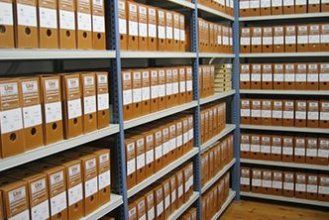
The search of documents in the archives of Lithuania
The search of documents in the archives of Lithuania is an important stage in the process immigration and acquisition of Lithuanian citizenship. Both the process of acquisition of Lithuanian citizenship and the process of obtaining a Residence Permit often starts from search and collection of the required data and documents. Usually, this process is bound with preparation of requests to archives of Lithuania. This initial phase is very important both for acquisition of the citizenship of Lithuania (its reinstatement, granting according to the simplified procedure etc.) and an issue a Residence Permit to a person (when the base of issue a Residence Permit is Lithuanian descent or a right of a person for reinstatement of the citizenship of Lithuania) and the further run of the process and its success depend on it.
What kind of requests are submitted to the Lithuanian Archives?
Requests submitted to the Lithuanian Archives can be very diverse, but the most common are the following:
1. Related to birth of a person in Lithuania;
2. Related to residence of a person in Lithuania;
3. Related to a marriage;
4. Related to the citizenship of Lithuania;
5. Related to deportation or imprisonment;
6. Related to a death by firing squad;
7. Other specialized requests dependently on the circumstances of the case.
Document search: what is important when making requests?
On formation of request, the initial data should be properly specified and described to ensure a success of the data search.


Document Legalization in Lithuania – Apostille
In Lithuania, the legalization of documents and certification by an Apostille are crucial steps for the recognition of official papers abroad. The Apostille, issued under the Hague Convention, confirms the authenticity of Lithuanian public documents, enabling their acceptance in other member countries without further legalization. For countries not part of the Apostille Convention, documents must undergo the legalization process at Lithuanian diplomatic missions or consular offices. This guide explains the procedures, requirements, and where to obtain Apostille or legalization for documents issued in Lithuania.
Legalization vs. Apostille: What’s the Difference and When Are They Needed?
It is required that documents issued by institutions of foreign states or their copies should be legalized or certified by an Apostille prior to their submission to state institutions of Lithuania.
Step-by-Step Guide to Legalizing Documents for Use in Lithuania
The procedure of legalization is more complicated. A document issued by an institution of a foreign state should be legalized in the foreign state and then in Lithuania. The process of certification of a document by an Apostille is simpler and shorter; however, certification of a document by an Apostille is not available in all states.
Hague Convention States: Apostille Certification Made Easy
Certification of documents by an Apostille is possible in the states having joined to the 1961 Hague Convention abolishing the requirement of legalization for documents issued in foreign states. The states where legalization of documents has been abolished and certification of documents by an Apostille is applied are listed below:
- Albania;
- Andorra;
- Antigua and Barbuda;
- Argentina;
- Armenia;
- Australia;
- Austria;
- Azerbaijan;
- Bahamas;
- Bahrain;
- Barbados;
- Belarus;
- Belgium;
- Belize;
- Bolivia;
- Bosnia and Herzegovina;
- Botswana;
- Brazil;
- Brunei;
- Bulgaria;
- Burundi;
- Canada;
- Chile;
- Denmark;
- Dominica;
- Dominican Republic;
- Ecuador;
- Estonia;
- Eswatini;
- Fiji;
- Philippines;
- Finland;
- France;
- Georgia;
- Germany;
- Greece;
- Grenada;
- Guatemala;
- Honduras;
- Hungary;
- Iceland;
- India;
- Ireland;
- Israel;
- Italy;
- Japan;
- Kazakhstan;
- Republic of Korea;
- Kyrgyzstan;
- Latvia;
- Lesotho;
- Liberia;
- Liechtenstein;
- Lithuania;
- Luxembourg;
- Malta;
- Marshall Islands;
- Mauritius;
- Mexico;
- Moldova;
- Monaco;
- Montenegro;
- Namibia;
- Netherlands;
- New Zealand;
- Nicaragua;
- Norway;
- Oman;
- Panama;
- Paraguay;
- Peru;
- Poland;
- Portugal;
- Romania;
- Russia;
- St. Kitts and Nevis;
- St. Lucia;
- St. Vincent and the Grenadines;
- San Marino;
- Serbia;
- Seychelles;
- Singapore;
- Slovakia;
- Slovenia;
- South Africa;
- Spain;
- Sri Lanka;
- Suriname;
- North Macedonia;
- Sweden;
- Switzerland;
- Tajikistan;
- Thailand;
- Trinidad and Tobago;
- Tunisia;
- Turkey;
- Ukraine;
- United Kingdom;
- United States;
- Uruguay;
- Uzbekistan;
- Vanuatu;
- Venezuela;
- Zambia.
 Do You Need an Apostille? Legalization Rules for Non-Hague Countries

In countries that are not included in the list of countries of the Hague Convention, documents issued by foreign institutions should be legalized.
Apostille and Legalization Requirements by Country Type
| Topic | Details |
|---|---|
| Do You Need an Apostille? | Apostille is required for documents to be recognized in countries that are members of the Hague Convention. |
| Legalization Rules for Non-Hague Countries | Documents issued by foreign institutions in countries not part of the Hague Convention must be legalized through diplomatic or consular channels. |
Document Submission in Lithuania: When Legalization or Apostille is Not Required
In Lithuania, legalization or certification by Apostille is not required for documents issued in Moldova, Estonia and Latvia.
Vienna Convention: Simplified Rules for Civil Status Records in Lithuania
If a foreign state has joined to the 08 September 1976 Vienna Convention on Multilingual Extracts from Civil Status Records, any extracts from civil status records (such a records on birth, marriage, death etc.) in the form approved by the said Convention issued by a competent institution of such a state shall be accepted in Lithuania without legalization or certification by an Apostille
The states having joined to the Convention include:
- Austria;
- Belgium;
- Bosnia and Herzegovina;
- Bulgaria;
- Estonia;
- Greece (not ratified);
- Spain;
- Italy;
- Montenegro;
- Croatia;
- Poland;
- Lithuania;
- Luxembourg;
- Macedonia;
- Moldova;
- Netherlands;
- Portugal;
- France;
- Romania;
- Serbia;
- Slovenia;
- Switzerland;
- Turkey;
- Germany.

Current Updates on Document Certification in Lithuania
Changes in Legalization and Apostille Requirements
As of January 2025, Lithuania has introduced stricter regulations for accepting foreign documents. Documents issued by institutions of certain states now require mandatory Apostille certification to be legally valid in Lithuania. This adjustment aims to enhance document authenticity and streamline international processes.
Exceptions to Apostille Requirements
While Apostille is essential for most international documents, exceptions remain for countries with bilateral agreements or conventions, such as the Vienna Convention on Multilingual Extracts from Civil Status Records. These agreements simplify document recognition and eliminate the need for further certification.
Commonly Certified Documents in Lithuania
Foreign individuals and businesses commonly need Apostille certification or legalization for:
-
Birth, marriage, and death certificates
-
Educational diplomas and qualifications
-
Legal contracts and notarized statements
-
Court decisions and other judicial documents
How to Ensure Compliance with Lithuanian Requirements
To avoid delays, ensure that:
-
Your documents are certified in compliance with the Hague Apostille Convention or legalized if your country is not a member.
-
Accurate translations into Lithuanian are prepared and certified by a professional translator or notary in Lithuania.
Additional Resources
For further guidance on document legalization and Apostille certification, visit:
-
Lithuanian Ministry of Foreign Affairs: Official Website
-
Hague Apostille Convention: Hague Apostille Convention
By adhering to these updated practices, individuals and businesses can ensure smooth processing of their documentation in Lithuania.
Assistance with Apostille and Legalization Services in Lithuania
The MIGRATION LAW CENTER provides expert legal assistance in obtaining Apostille certification for documents issued in Lithuania. Also offers support throughout the legalization process for documents intended for non-Hague Convention countries. MIGRATION LAW CENTER team ensures that all legal requirements are met efficiently and effectively.
For inquiries or assistance, contact the MIGRATION LAW CENTER via email or phone:
-
Email: info@migration.lt
-
Phone: +370 68563053

Document Search in German Archives can be crucial for finding records that confirm historical facts related to an individual’s origins, escape, exile, and other important circumstances. This is especially relevant for individuals seeking to reinstate their Lithuanian citizenship, as the process requires documents confirming their departure from Lithuania before March 11, 1990, or details of their escape. German archives, especially documents related to DP (displaced persons) camps and concentration camps, play an essential role in these processes.
What Documents Are We Looking For in German Archives?
German archives hold documents that are often sought after, particularly related to refugees, war prisoners, and those who lived in concentration and DP camps. The main types of documents include:
- DP Camp Documents – Records related to individuals who lived in DP camps after World War II, as well as information about their living conditions and relocations.
- Concentration Camp Documents – Various registration, transport, and work documents created for individuals who lived in concentration camps.
- Prison Camp Documents – Information about the activities of prison camps, including prisoner registration and relocation records.
- Other Important Documents – Various administrative records such as refugee registration data, relocation records, etc., that can help establish a person’s identity, origin, and life circumstances. These documents are crucial for both historical research and legal processes, such as reinstating Lithuanian citizenship.
What Types of Searches Can Be Conducted for Documents?
Document searches in German archives can take various forms, depending on the information a person is trying to establish. Some of the most common searches include:
- Identification of Individuals – Finding documents that help confirm a person’s identity, such as registration numbers from DP or concentration camps.
- Relocation and Migration Documents – Seeking to establish where and when an individual was relocated, including the details of their departure from Lithuania.
- Exile and Escape Evidence – Searching for documents that confirm a person’s escape from the Soviet Union, their exile circumstances, or their escape from Germany.
What is Required to Conduct a Document Search?
To conduct a successful document search in German archives, the following information and data are necessary:
- Personal Data – Full name, date of birth, place of birth, and other relevant personal details.
- Residence Information – Information regarding places where the person lived, worked, or was relocated.
- Exile and Migration Data – Information about escape, exile, or migration events, which may be documented in various archival records.
- Special Documents – If any additional documents are available, such as family history records, they can be very useful in the search process.
How to Approach the Archive and What Procedures to Follow
When approaching a German archive, it is important to provide a clear and detailed inquiry with all known information about the person whose documents you wish to find. Depending on the archive, you may be required to fill out certain forms and pay a fee for the search.
Common Sources of Errors in Document Searches and How to Avoid Them
Some of the most common mistakes in the search process include incorrect personal data (such as misspelled names or birth dates), inconsistent time periods, or incorrect document types. It is crucial to provide as much accurate and detailed information as possible to ensure the search is targeted and effective.
Search Timeframes for Documents
The time required for a document search can vary depending on the archive, the complexity of the search, and the availability of information. On average, searches may take from a few weeks to several months. This depends on the scope of the search and the archival organization.
How to Interpret Found Documents
Interpreting documents can be challenging, as they are often presented in older formats or foreign languages. It is important to have knowledge of archival language and specific markings that may help better understand the information provided. If in doubt, consulting with experts or lawyers is advisable.
The Importance of Legal Assistance in the Document Search Process
Lawyers specializing in citizenship reinstatement and archival document searches can help ensure that the search complies with current laws and that all required documents are gathered accurately and promptly.
For more information about the document search process in German archives or to request legal assistance, contact us:
Email: info@migration.lt
Phone: +37068563053
The Importance of DP Camp Documents in the Lithuanian Citizenship Reinstatement Process
To reinstate Lithuanian citizenship without renouncing existing citizenship (dual or multiple citizenship), it is crucial to prove that an individual was a Lithuanian citizen before June 15, 1940 and left Lithuania before March 11, 1990, or was exiled. Documents such as DP camp records can be pivotal to this process.
If documents confirm that an individual was personally associated with a DP camp, it can serve as evidence of their departure from Lithuania, thus increasing their chances of reinstating citizenship under the dual citizenship principle.
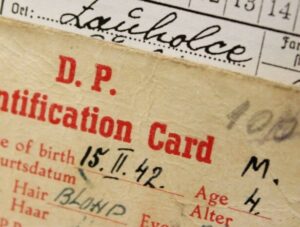
Dual Citizenship in Lithuania – Required Documents for Departure from Lithuania Before March 11, 1990 or Exile
Lithuania, adhering to strict citizenship laws, permits dual citizenship under certain conditions. Individuals who were Lithuanian citizens before June 15, 1940, but were later exiled, left, or were forced to leave Lithuania before March 11, 1990, have the right to reinstate their Lithuanian citizenship without renouncing their current citizenship (dual or multiple citizenship). This right extends to their descendants (children, grandchildren, and great-grandchildren).
One of the most important documents in this process is evidence of departure from Lithuania. Such evidence can be found in German archives, such as registration records from DP camps or exile documents. These documents are essential to prove that an individual left Lithuania before March 11, 1990, as this is the key requirement for dual citizenship eligibility.
What Additional Documents Can Be Useful in the Lithuanian Citizenship Reinstatement Process?
In addition to DP camp documents, other important records can include documents proving Lithuanian citizenship before June 15, 1940, such as a Lithuanian citizen passport, birth certificates, and other documents that can confirm the individual meets the criteria for reinstate Lithuanian citizenship.
Refugees and Exiles in German Archives: Insights and Importance
Many documents stored in German archives testify to the complex history of people’s escapes, exile, and migration after World War II. These records help not only to understand an individual’s history but also to grasp the broader historical context of these events.
Other Archives and Sources Where Related Documents Can Be Found
Apart from German archives, other archives, such as those in Poland, the Czech Republic, and other countries, may hold similar documents. International organizations like the Red Cross may also possess relevant records.
Can My or My Ancestors’ Documents Be Ordered from German Archives and Sent to My Address?
Yes, under legal representation, Migration Law Center lawyers can order your or your ancestors’ documents from German archives. If necessary, documents can be sent to your specified address. Additionally, if required, the documents can be translated, certified with an Apostille, or legalized.
For more information about the document search process in German archives or to request legal assistance, please contact us:
Email: info@migration.lt
Phone: +37068563053
Conclusion
Document searches in German archives, particularly those related to DP and concentration camp records, are essential for both historical and legal purposes. These documents can assist in reinstate Lithuanian citizenship by confirming an individual’s eligibility under dual citizenship laws. To conduct a successful search, it is important to have accurate personal information and a clear understanding of which documents need to be found.


For several years in turn, this presentation of crafts, national foods, customs and traditions is arranged by communities of national minorities in Vilnius Old City in a weekend of September. Various craftsmen, cookery masters, singers and dancers present themselves. Visitors are provided an opportunity to taste various traditional foods, to familiarize with various cultures and customs

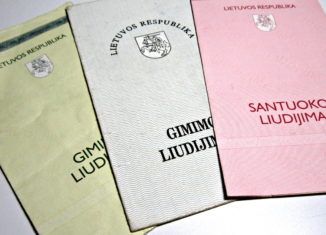
Corrections or Amendments of Civil Status Records in Judicial Procedure
Correct and accurate civil status records are essential for proving family relationships and legal identity, especially during important processes such as reinstatement or acquisition of Lithuanian citizenship and obtaining residence permits. When these records contain errors or missing information, they can cause significant delays or even halt these processes. In such cases, individuals may need to seek correction or amendment of their civil status records through a judicial procedure to ensure their documents reflect the true facts.
Issues with Civil Status Records Affecting Citizenship and Residence Permits
Sometimes, extracts from a civil status record (such as related to birth, marriage, death etc.) required for the process of reinstatement of the citizenship of Lithuania or its acquisition in other ways, as well as in the process of issuing a Residence Permit, are not available or contain incorrect information. For example, the first name or surname of the father or mother of the person may be missing or incorrectly recorded in the Certificate of Birth. This can prevent the person from proving family connections or that their ancestors were of Lithuanian origin or citizens of Lithuania. Until such records are corrected, the process of citizenship reinstatement or residence permit issuance may be halted.
Applying for Correction or Amendment of Civil Status Records
In such cases, the person must first apply to a Civil Registry Office for correction or amendment of the record. However, if sufficient evidence is lacking, the Civil Registry Office will not make corrections. Consequently, the person must apply to a court to request correction or amendment of the civil status record through a judicial procedure.
Legal Assistance for Civil Status Record Corrections in Court
We provide legal assistance and consulting regarding corrections and amendments of civil status records in judicial procedures. Our services include preparing the necessary requests and documents for submission to state institutions and courts, as well as representing the interests of the person throughout the process.


Establishment of a Legal Fact in a Judicial Procedure
In cases where essential documents are missing or contain discrepancies, establishing a legal fact through a judicial procedure becomes necessary. This process is crucial for individuals seeking reinstatement or acquisition of Lithuanian citizenship, as well as for those applying for a residence permit. By legally confirming family relationships, identity, or other vital circumstances, applicants can ensure that their documentation meets the requirements set by Lithuanian authorities and avoid delays in their cases.
When Documents Are Missing or Inconsistent
In certain cases, a person may lack some documents required for supporting the circumstances important in the process of reinstatement of the citizenship of Lithuania or its acquisition in other ways, as well as in the process of issuing a Residence Permit. This may include documents supporting family connections, proving that a certain person (a citizen of Lithuania) was a father, a mother, a grandmother, a grandfather, a great-grandmother, or a great-grandfather of an applicant — or proving that persons mentioned in several documents whose first names and/or surnames differ are in fact the same person.
Applying to the Court to Establish a Legal Fact
In case of lack of evidence or discrepancies between the documents, a person may apply to a court for establishing a legal fact, such as identity, kinship, or other essential data relevant for legal procedures.
Legal Support in Judicial Name and Identity Confirmation
We provide legal assistance and consulting related to the establishment of a legal fact in a judicial procedure. We prepare the necessary requests and documents to be submitted to state institutions and courts, and represent the interests of the applicant throughout the process.


Establishment of a fact of change of the first name or the surname in a judicial procedure
When applying for the reinstatement or acquisition of Lithuanian citizenship, individuals often face difficulties due to inconsistencies in the spelling of first names or surnames across various documents. These discrepancies may involve not only the applicant but also their ancestors, and they can lead to delays or suspensions in the Lithuanian citizenship process. In situations where no official documents confirming the name or surname change exist, individuals may be required to establish this fact through a judicial procedure. Understanding the legal process and knowing your options is essential for moving forward.
Common Problem in Citizenship Applications: Name Discrepancies
A frequent problem arising on submission of an application for reinstatement or acquisition of citizenship of Lithuania is discrepancy between names n/or surnames in documents of the applicant and his father, mother, grandfather, grandmother, great-grandfather or great-grandmother. Sometimes, examination of the case may be suspended because of several different letters in a first name or a surname.
What to Do When Name Change Documents Are Missing
In such case, the family connections remain unproven and documents on changes of the name and/or surname are required from the person. If the person has not such documents, he (she) applies to state institutions for search and issue of them. If the documents are not found by the said institutions, the person shall apply to a court.
Legal Assistance with Name or Surname Change Procedures
We provide legal assistance and consulting related to changes of the name and/or surname of a person. In addition, we prepare documents to be submitted to a court or other state institutions and represent the interests of a person.